Notice
See what changed around the plant.
Plant care that reads the room. A product and identity built around the person with just one more plant on the windowsill.
READ THE CASE STUDY
The best friend your plants ever had.
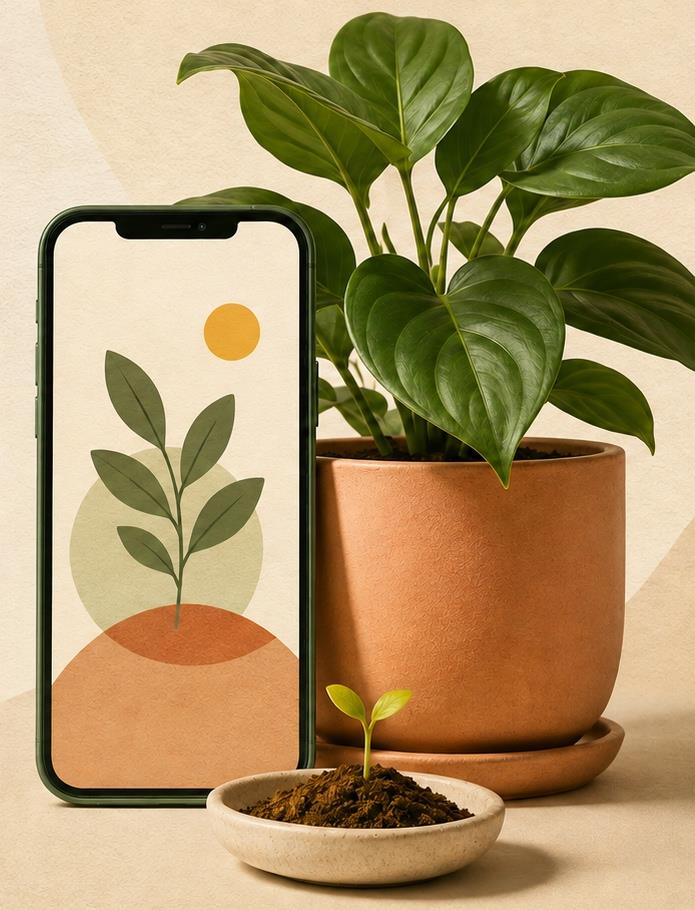
A watering reminder can arrive exactly on time while the soil is still damp. That mismatch is the starting point for Soilmate. I wanted the advice to acknowledge the conditions around the plant.
The proposed product combines a plant profile with local conditions and recent care. It gives the owner a clear next step, with a short explanation of why it changed.
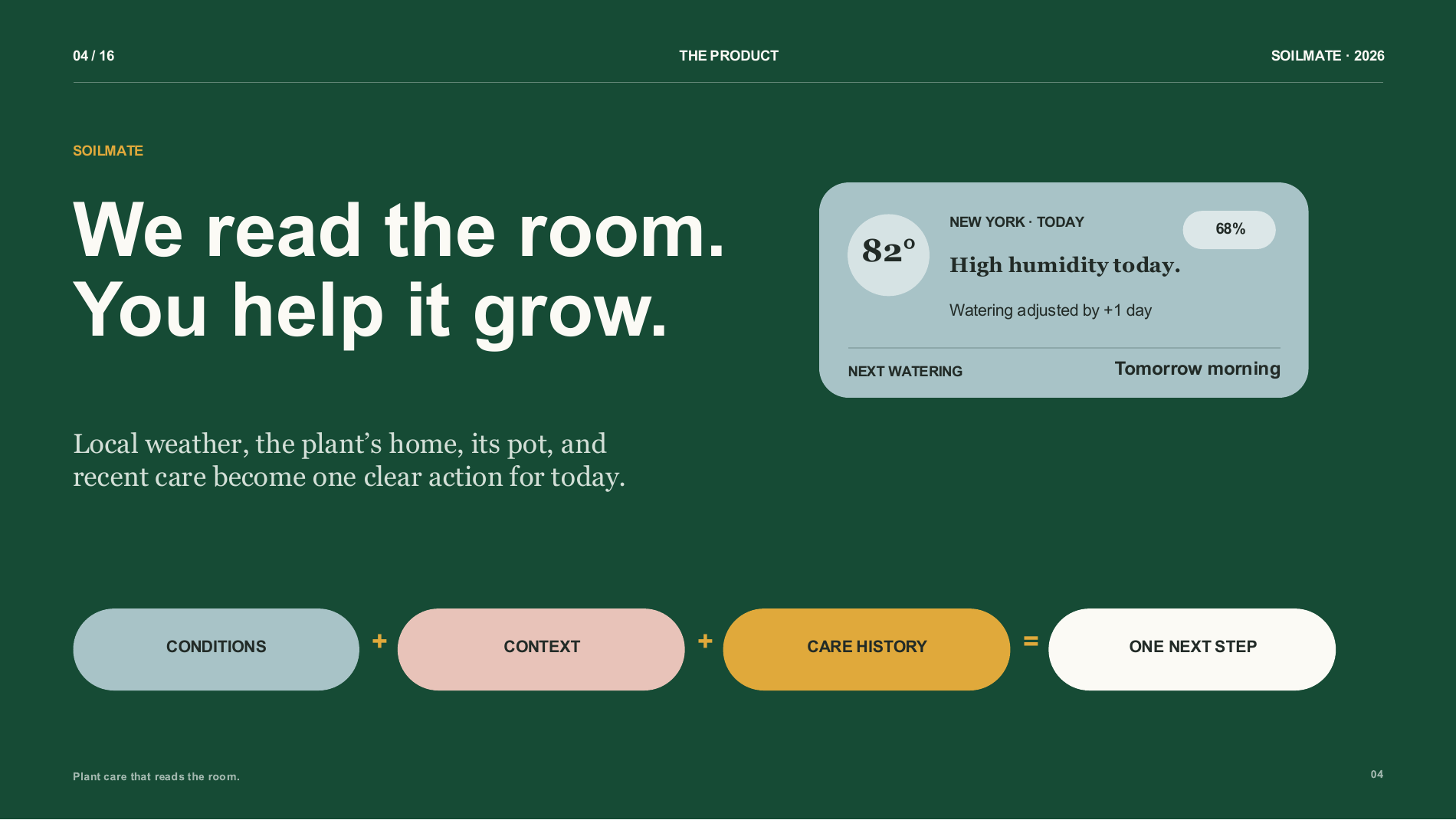
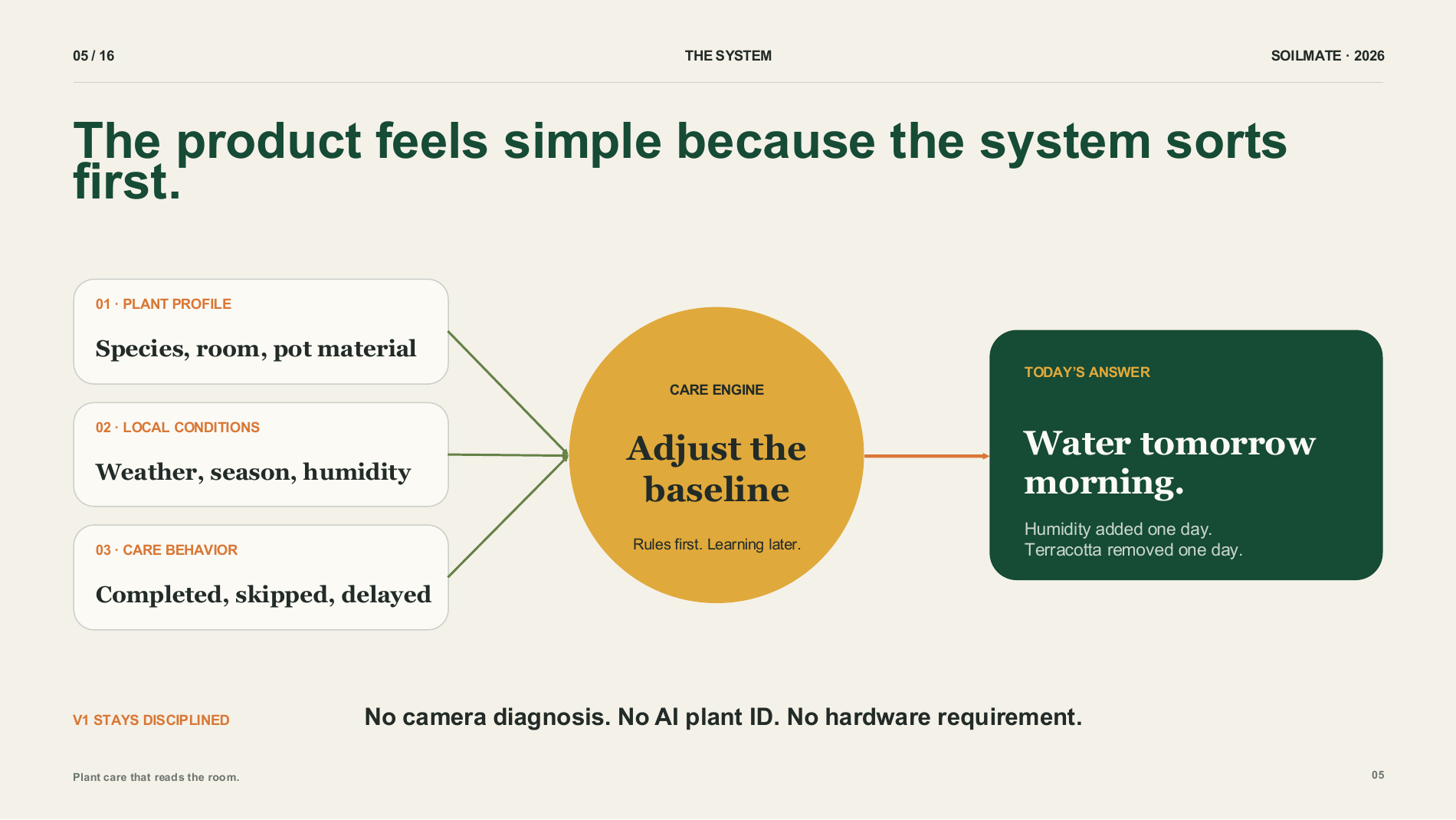
The first version stays with a rules-based care engine. The plant’s species and pot material establish a baseline. Care history and environmental inputs would help adjust it.
Outdoor weather can only offer part of the picture for an indoor plant. The recommendation needs the room context and botanical validation behind it. That is the important product challenge to resolve before claiming accuracy.
The concept leaves camera diagnosis and plant identification out of the first release. It also avoids requiring a separate sensor.
The experience should be short enough to fit into an ordinary morning. Someone opens the app, understands what changed and completes the care. Logging that action gives the next recommendation more context.
The explanation matters. People should be able to understand why a task moved instead of trusting a changing date without a reason.
See what changed around the plant.
Read a brief explanation of what it means.
Complete or defer the suggested task.
Record the care so the next visit reflects it.
The identity needs to feel approachable when someone has already forgotten to water a plant. Deep green gives the system a steady base. Cream and warmer accents keep the experience from feeling clinical.
The voice is direct and kind. A short explanation should help someone decide what to do next without making them feel they have failed a test.

The initial audience in the pitch is an urban plant owner with four to twenty houseplants. Their collection is getting harder to remember. They want manageable advice that fits the apartment they actually live in.
A New York beta is the proposed starting point. Plant swaps and apartment communities offer places to learn how people describe their care routines. A plant-shop partnership could introduce Soilmate at the moment someone brings a new plant home.
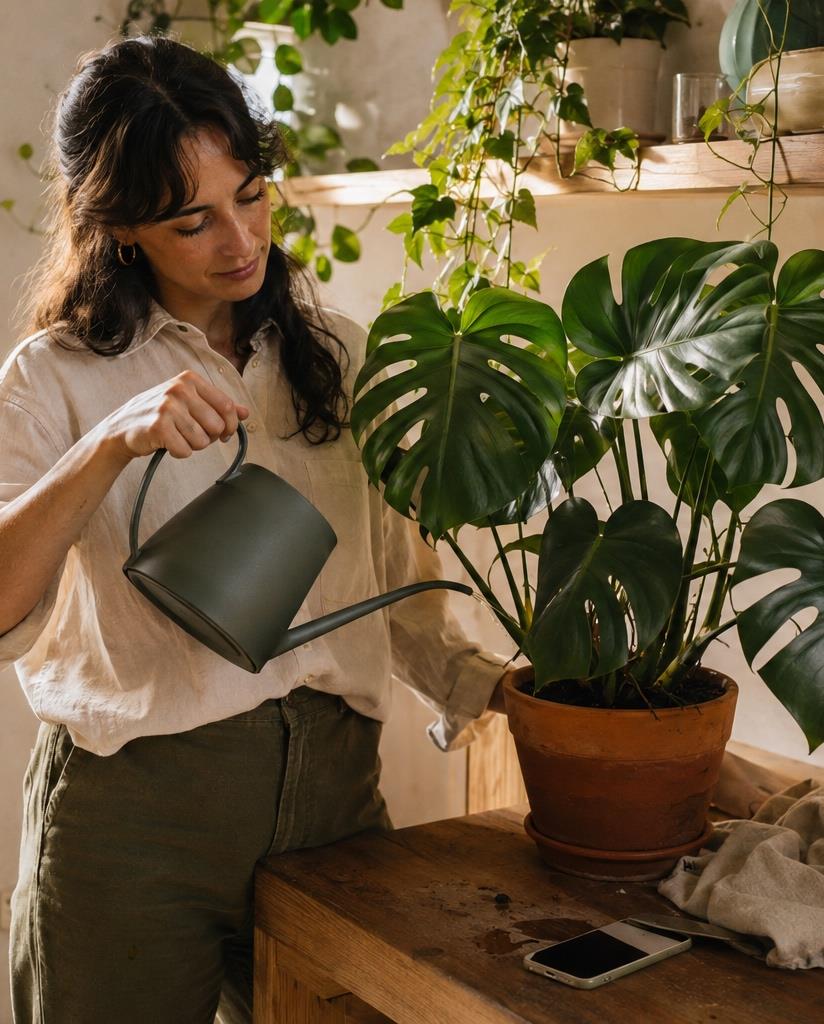
The fourth plant makes the habit harder to manage.
The proposed free version supports three plants. Plus would expand the collection and care history at an illustrative $2.99 per month.
The useful question for a first trial is whether people trust the explanation enough to return and complete care. The price and upgrade point would need testing alongside that behavior.
The physical designs carry the identity into the routine around the plant. The care-club collection and welcome kit give the brand a place on the shelf, with practical objects that belong near a windowsill.
In the proposed launch, a plant-shop QR card would help a customer create a profile for their new plant. The printed experience leads into its first care task.
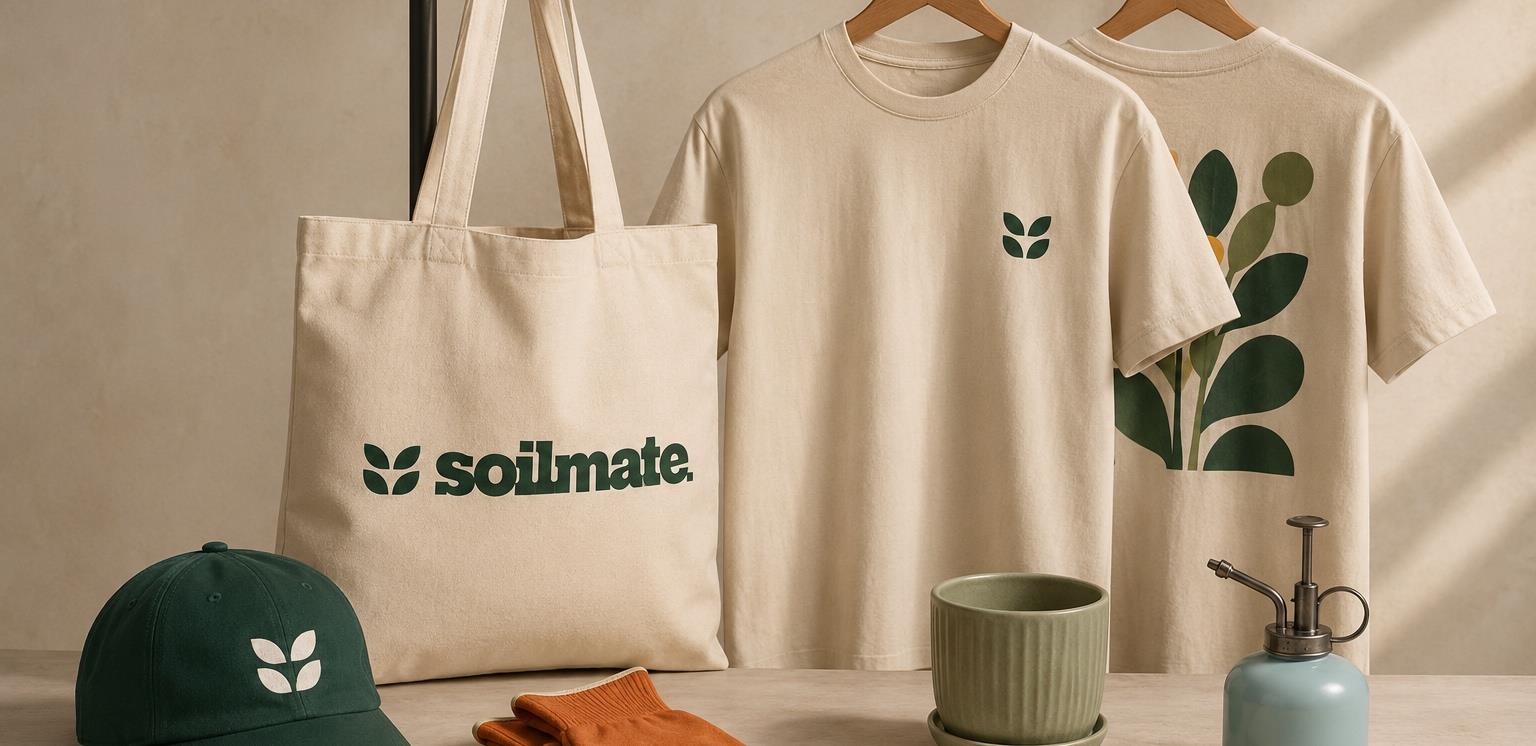
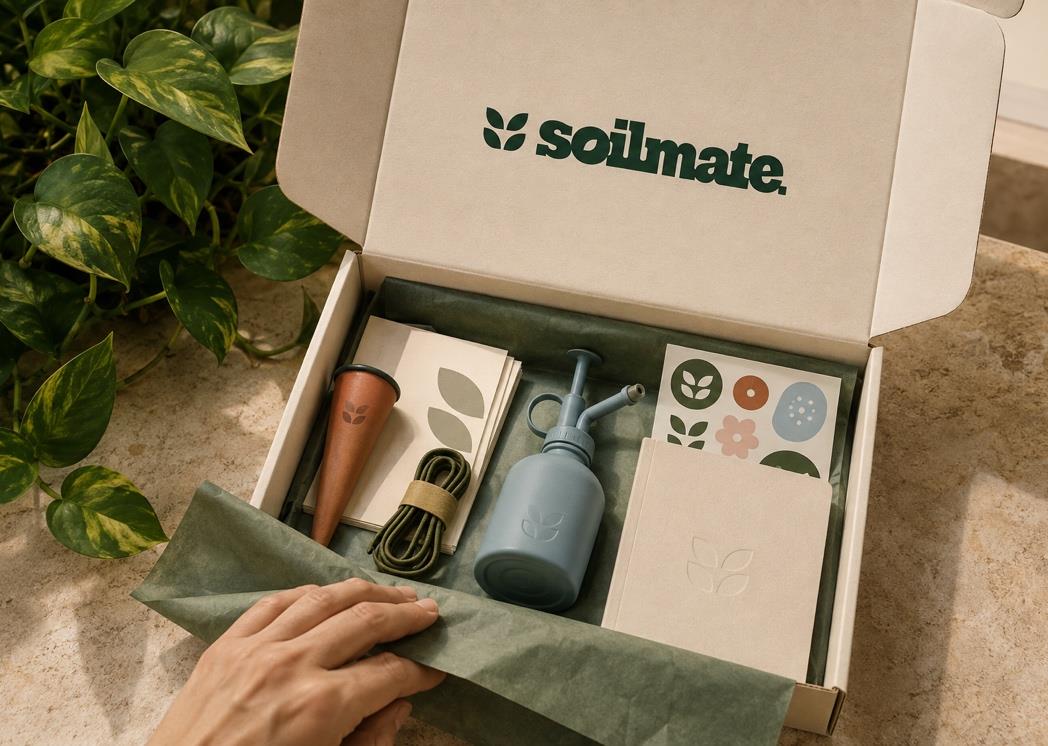
A little recognition gets the conversation started. Digital ads lead plant owners to practical help at a neighborhood shop.

You remembered your plant.
Let’s get to know your windowsill.
The proposed click-through introduces the Windowsill Clinic and what to bring. A visitor can explore the app concept after the consultation.
A consultation counter inside an existing plant shop. Bring a photo of your setup and leave with a care card you can use that day.
THE WINDOWSILL CLINIC / EXPERIENCE CONCEPT
Show a photo of your plant and describe the window, pot and recent care. A specialist listens before making a suggestion.
The takeaway is a dated care card with the plant’s setup and the specialist’s recommendation. A QR route can carry that profile into a future beta.
Whether visitors understand their care card and use it at home. Ask what they still need help with before expanding the clinic or app.
The identity and product proposal establish the experience. The next stage would test the care rules with botanical input, then put the daily flow in front of plant owners.
The goal is to learn whether the explanation helps and whether people keep using it. Healthy habits and reliable advice have to come before a larger rollout.