CONSTRAINTS FIRST
Start with the player’s commander and power goal. Budget and cards already owned set the limits of the recommendation.

PRODUCT / BRAND / EXPERIENCE

WHERE I STARTED
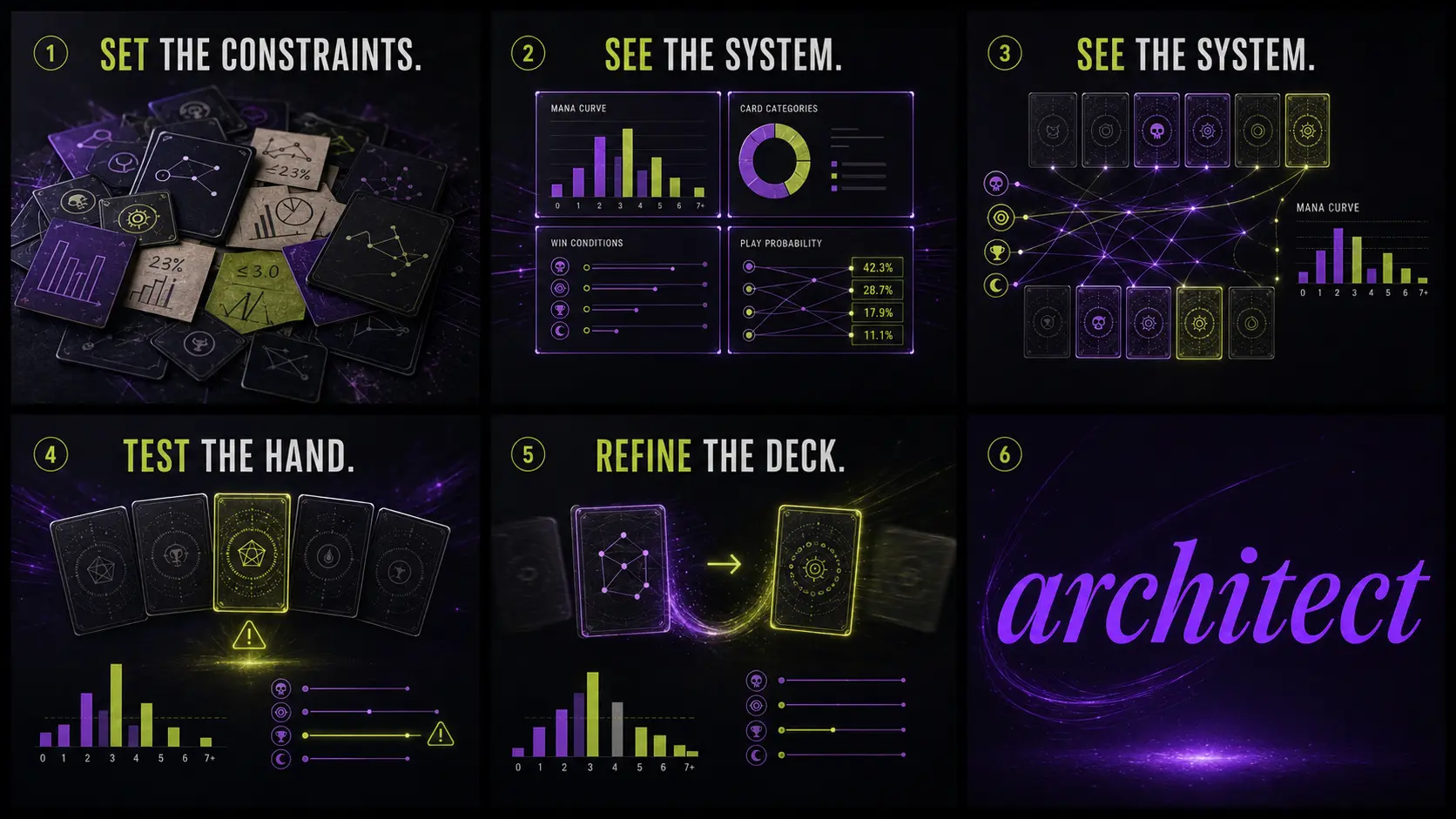
Commander players make decisions across scattered sources, then find the weakness at the table. I built Architect around that gap. The proposed flow starts with the player’s constraints and makes room to test a deck before buying more cards. Recommendations also need to explain their reasoning, especially when budget and power goals pull in different directions.
“Treat deck building as architecture. Set the constraints and build, then stress-test the deck and refine its structure.”
WORKING THROUGH IT
Start with the player’s commander and power goal. Budget and cards already owned set the limits of the recommendation.
Scryfall and EDHREC inform recommendations, with tournament signals adding context players can understand.
Play tests and combo checks expose weaknesses before players spend money. Versioning records what changed.
Monitoring and swap recommendations keep the deck responsive to a changing environment.
THE IDENTITY
Architect gives measured decisions a visible structure. Its quiet identity treats deck building as composition.

Build less. Win more.
THE VISUAL LANGUAGE
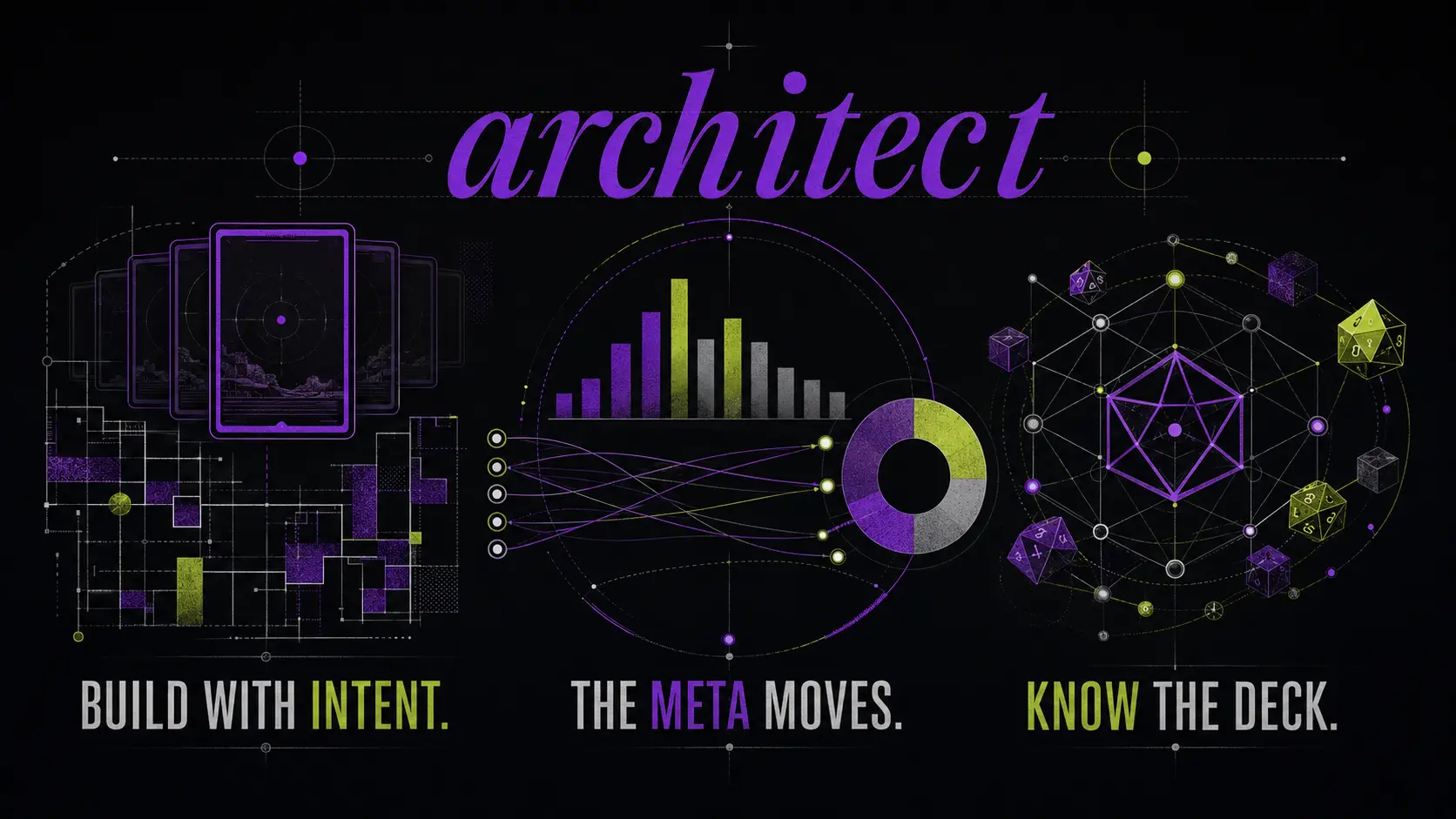
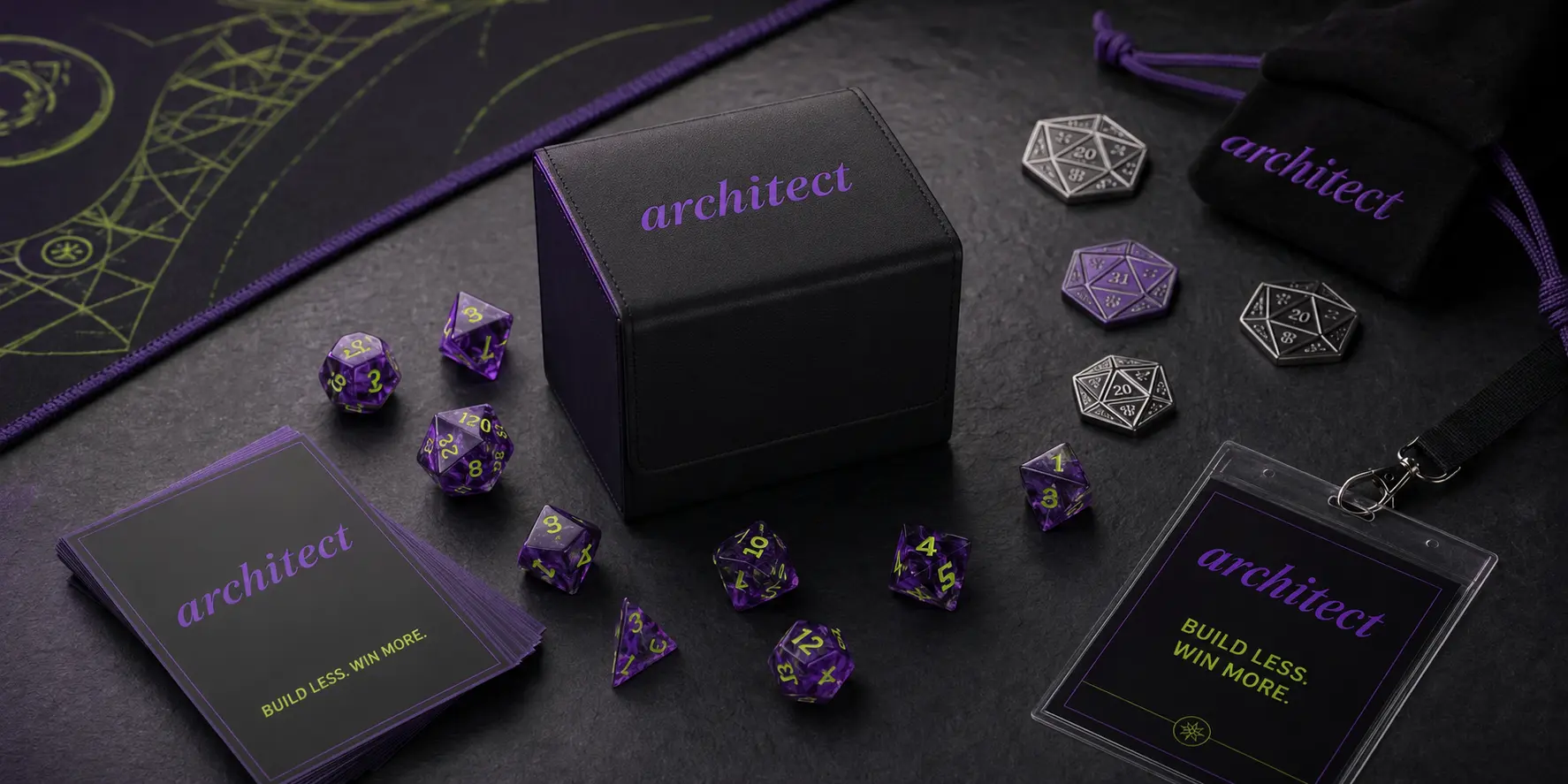
Card plans and probability rings appear in the illustrations. Dice geometry carries into physical objects, with violet resin and acid-lime details kept against graphite surfaces. The wordmark stays consistent across them.
APPLICATION
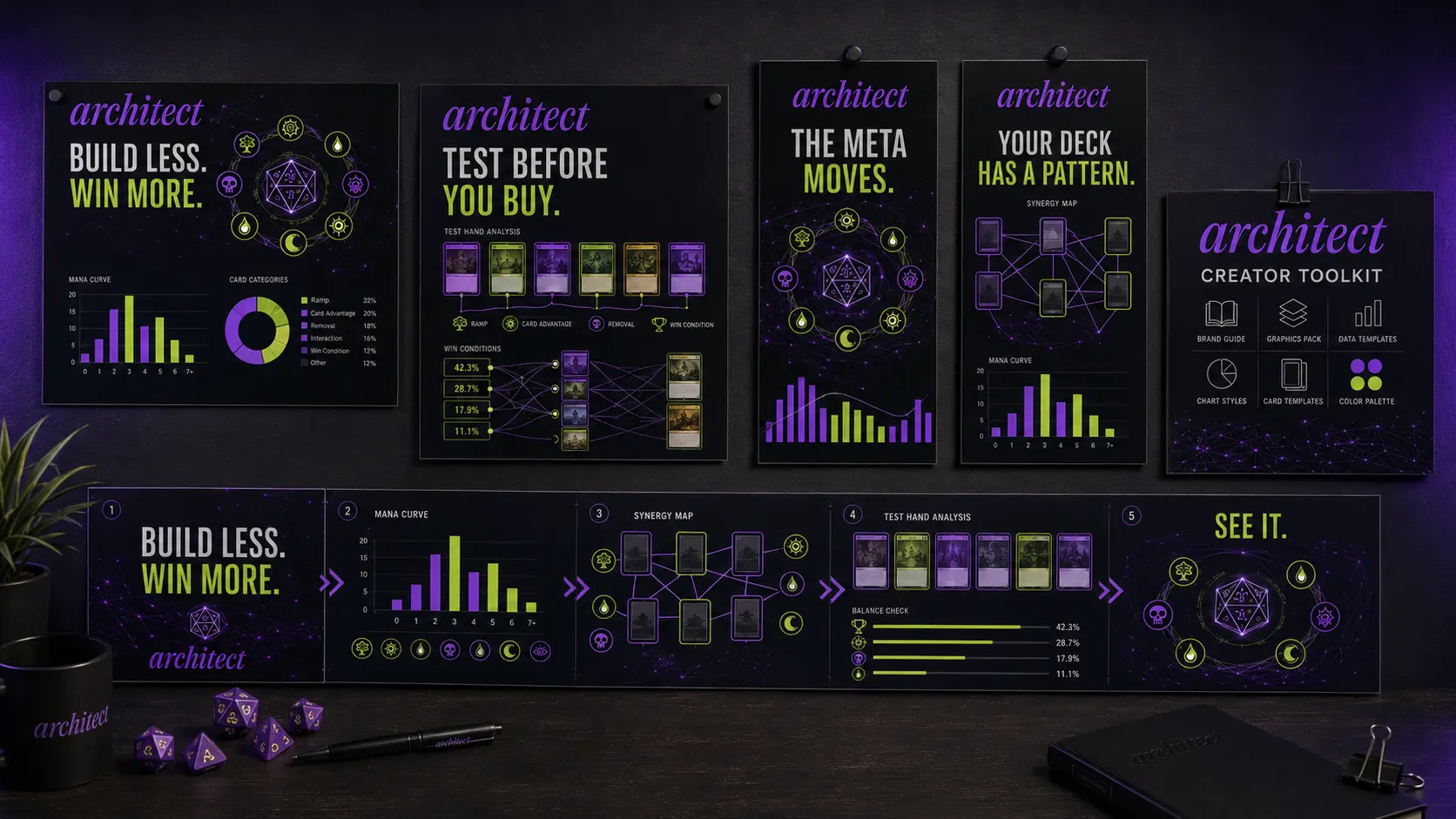
The campaign puts a deck problem in front of the player, then shows how Architect could help examine it. Carousels carry the explanation. Short motion and creator kits bring it into the launch. This is a speculative expansion of my independent project.

EXPERIENCE
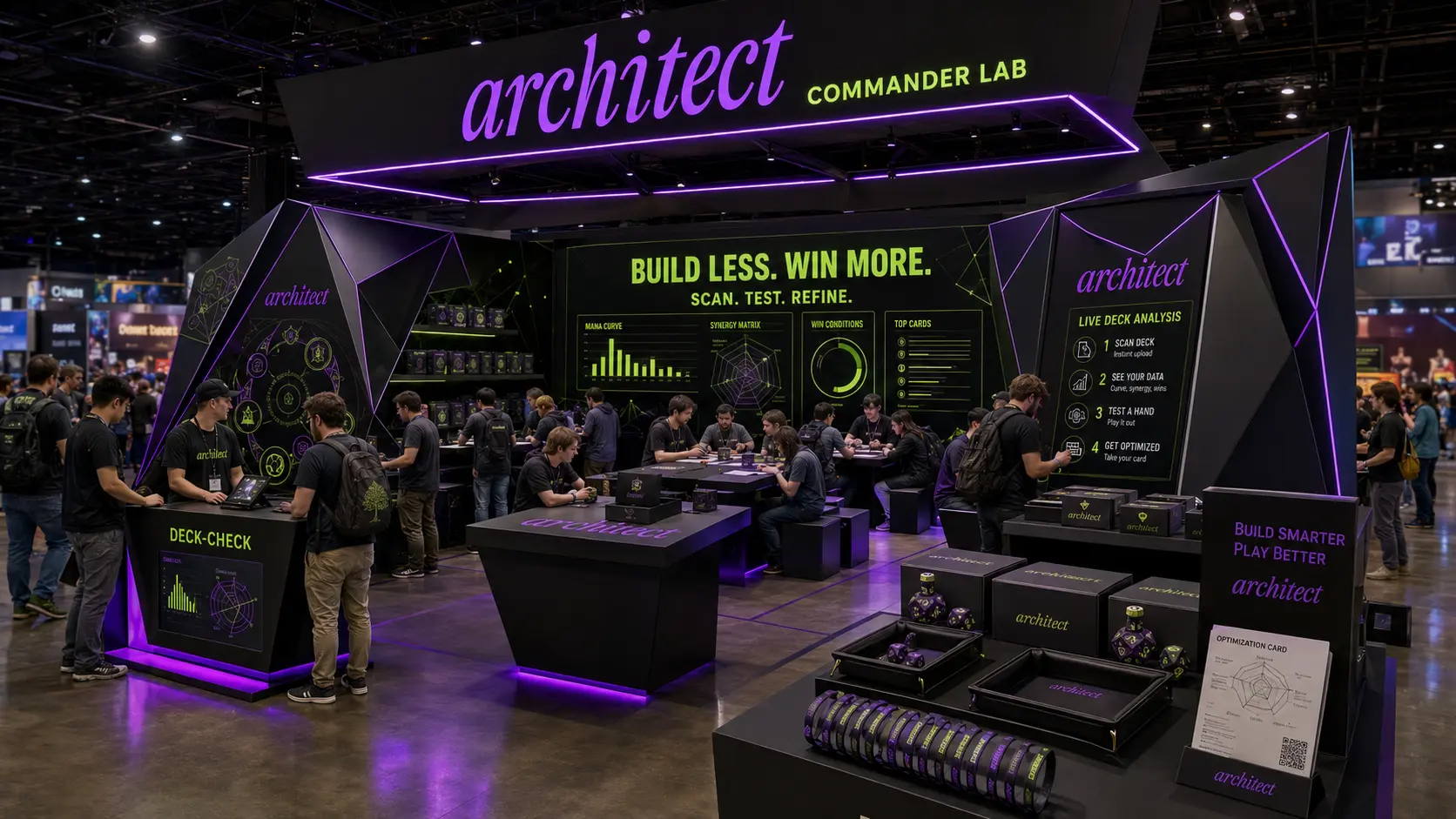
Two speculative event concepts extend the product: an intimate Commander Night at Hex&Co. and a larger Commander Lab at a Magic: The Gathering event. Neither is real client work or an active sponsorship. No partnership has been announced.

Show the recommendation in a carousel, then use a short motion sequence to explain what changes in the deck. Creator kits can give players a version to try together.
At the proposed Hex&Co. night, table signs identify the sessions. Players would leave with a printed deck review, with registration and live standings available during the event.
A speculative Magic: The Gathering event activation lets players scan a deck, see its curve and synergy, test a hand, and leave with a printed refinement plan.
Keep the wordmark visible on the playmat and deck box. Dice and counters use the same violet and lime details.
WHERE THE CONCEPT STANDS
Architect brings the deck-building idea into a consistent interface and brand. The event concepts let players imagine using it together. They are speculative extensions. The product case depends on showing how its recommendations work and where their limits are.
OPEN ARCHITECT ↗