Independent Creative ExplorationTHE MANOR
LIVE WITH HISTORY. KEEP IT STANDING.OPEN THE ARCHIVE ↓
RALPH LAUREN HOME × NATIONAL TRUST / SPECULATIVE CONCEPT
RALPH LAURENHOME×NATIONAL TRUST
FOR HISTORIC PRESERVATION
FOR HISTORIC PRESERVATION
THE MANOR
ARCHIVES.
LIVE WITH HISTORY. KEEP IT STANDING.OPEN THE ARCHIVE ↓THE PREMISEFROM INTERIOR TO RESTORATION
THE QUESTIONCAN A ROOM
CAN A ROOM
FUND THE
ROOM THAT INSPIRED IT?
I began with rooms that already hold a history. The proposal connects Ralph Lauren Home to the National Trust through specific places and their materials. The difficult part is carrying those references into a new object without smoothing away the people and labor behind the source.
THE IDEAUse documented interiors as the source for a home collection. Return part of every sale to the sites and craftspeople behind it.
HERITAGE WITH A SOURCE.
Each piece starts with a documented detail from a named place, used with permission.
SALES THAT FUND REPAIR.
A fixed share supports named restoration work and paid training in preservation trades.
AN OBJECT WITH A RECORD.
Every numbered piece identifies its source, maker, materials, and contribution.
PROPOSED FIRST EDITION
Read one room through one pattern.
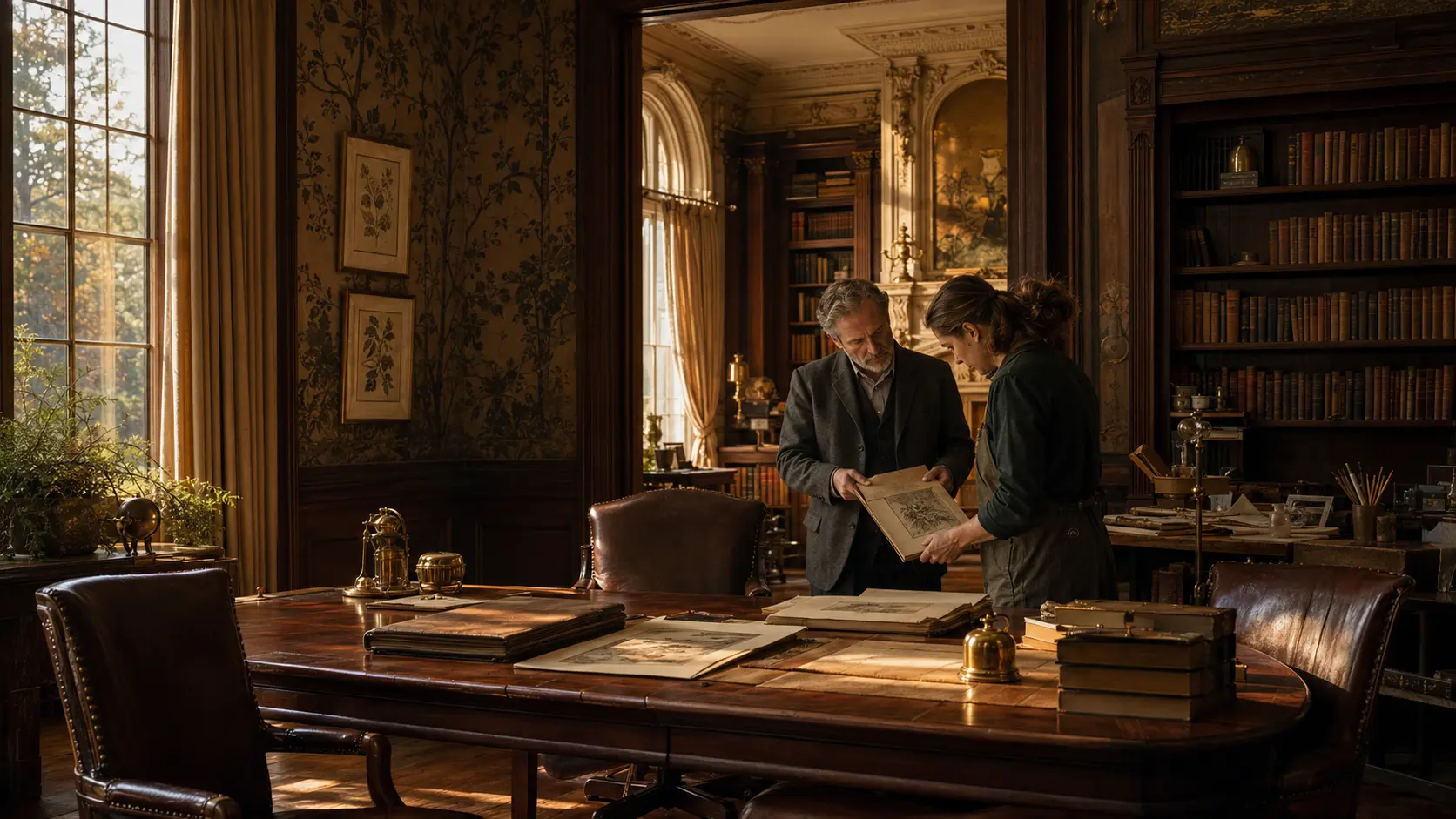
The three-house collection can begin with Lyndhurst’s architectural papers. I would first show a small material study beside its source record. That lets a visitor see exactly where a historic reference became a new design.
- THE FIRST OFFER
- One proposed pattern family presented at an existing home showroom. A source image and maker note accompany the sample. The historic site would approve the reference and identify a specific preservation project before a sales claim appears.
- HOW YOU TAKE PART
- The room photograph leads to the sample table. Compare the source with the new drawing, inspect the paper and read the maker record. A sample card carries that information home for a considered purchase.
- WHAT I WOULD DELIVER
- The pattern artwork and source label, with a sample folder and one campaign layout. A maker record and proposed contribution belong on the same edition page. An existing showroom supplies the setting.
- BEFORE IT GROWS
- Check whether visitors can identify the source and distinguish reproduction from reinterpretation. A manufacturer must assess the finish. The funding percentages below remain planning assumptions until a costed arrangement is agreed.
Where it could go next
Filoli’s textiles and Kykuit’s cabinetmaking retain their full design studies. The salons and wider room settings are later editions. Each site adds its own approved source and maker process.
PRODUCT ARCHITECTURETHE GREAT AMERICAN ESTATES COLLECTION
THREE MATERIAL CHAPTERSTHE ARCHIVE
THE ARCHIVE
ENTERS THE HOME.
Edition 001 is organized by place. Lyndhurst informs architectural papers. Filoli shapes garden textiles, with Kykuit guiding the cabinetmaking. Labels distinguish historic evidence from new design.
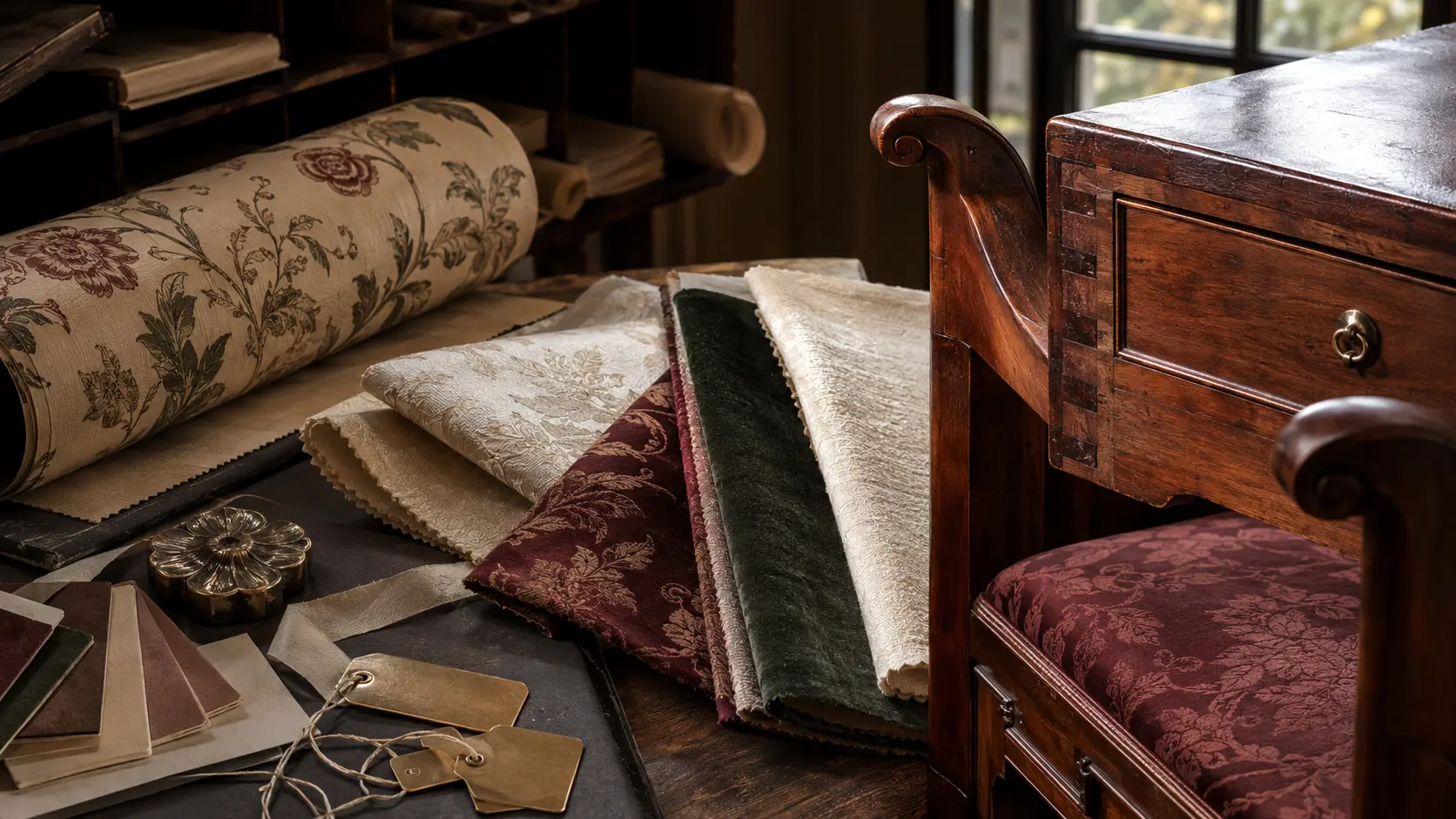
LYNDHURST / ARCHITECTURAL PAPERS
GOTHIC REVIVAL / HAND-SCREENED PAPER / EMBOSSED FOILLyndhurst's surviving interiors and Alexander Jackson Davis's ornament supply the references. Labels separate reproductions from reworked details and identify new drawings.
FILOLI / GARDEN TEXTILES
SILK JACQUARD / COTTON VELVET / LINEN DAMASKFiloli's house and gardens supply motifs, with the orchard contributing to woven repeats and borders. Upholstery carries the same references. The palette follows the estate from morning through winter.
KYKUIT / CABINETMAKING
RESPONSIBLE TIMBER / BRASS / TRADITIONAL JOINERYKykuit's Codman interiors guide writing tables and cabinets, with occasional pieces completing the collection. Museum objects would require separate permission and conservation review.
CAMPAIGN SYSTEMTHE HOUSE REMEMBERS
LAUNCH FILM / EDITORIAL / RETAIL / SALONS
THE ROOM HOLDS
THE SOURCE.
THE HOUSE REMEMBERS
The film moves from Lyndhurst through Filoli to Kykuit. Conservators and craftspeople explain what survived and what changed. Site interpreters place that work in context, including what still needs repair.
ARCHIVE / ISSUE 001
A numbered volume brings together measured drawings, object records, material tests, oral histories, and finished rooms in one restrained catalog.
THE LIVING ARCHIVE
At 888 Madison Avenue, each sample links to its source. Object labels name the maker and explain the adaptation, including the restoration work each sale supports.
SALON + OPEN HOUSE
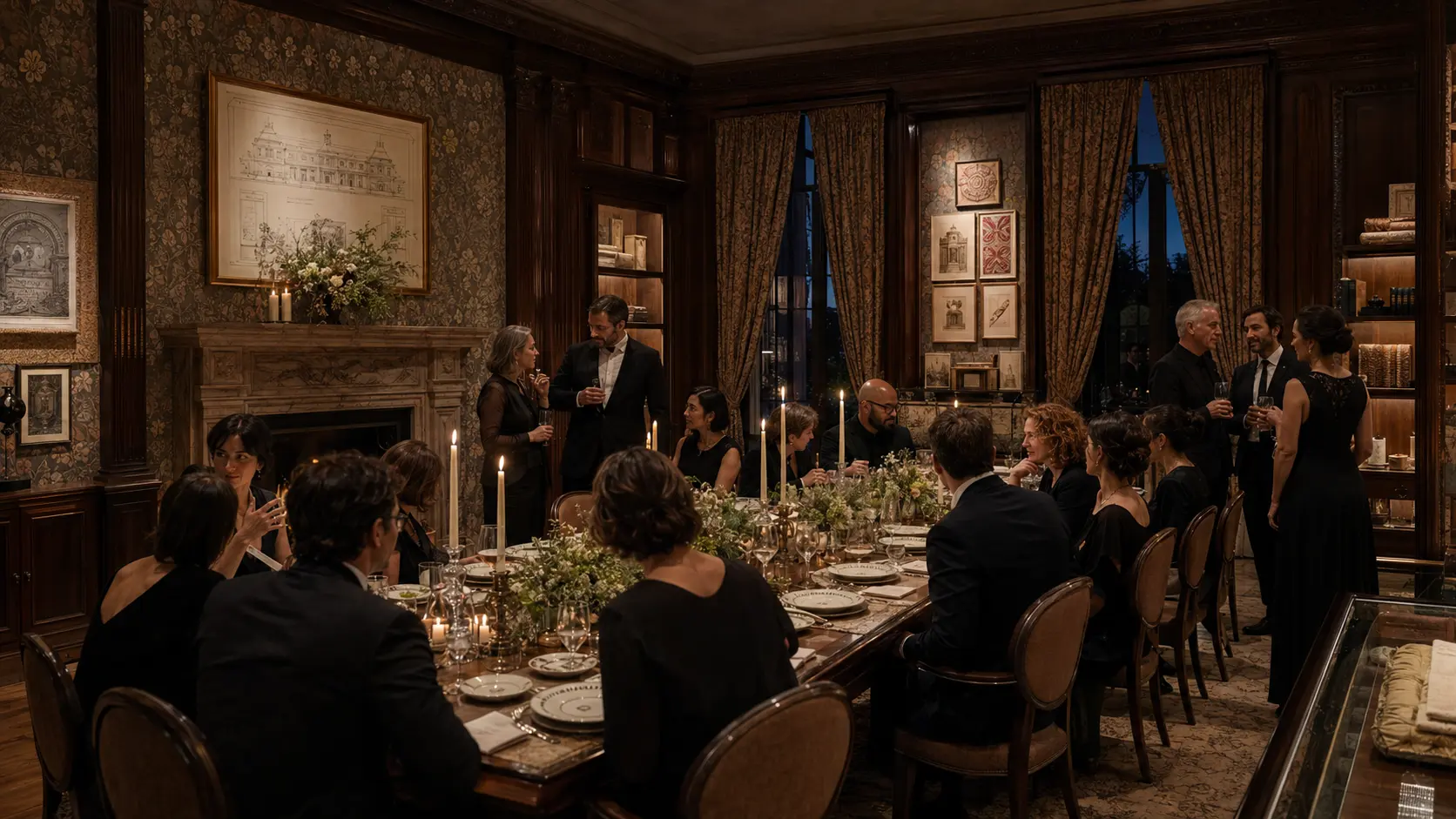
Each private salon pays for a public access day at the same site. Designers, historians, donors, and apprentices meet at night. The doors open to the public the next day.
EXPERIENTIAL RETAILTHE LIVING ARCHIVE
A ROOM YOU CAN
READ.
888 Madison Avenue becomes a study room based on one documented American interior. Labels identify the source, designer, type of adaptation, and restoration project.
Each private salon pays for a public access day. Site staff set attendance limits and control how installations use the rooms.
DIGITAL OWNERSHIPTHE PROVENANCE PASSPORT
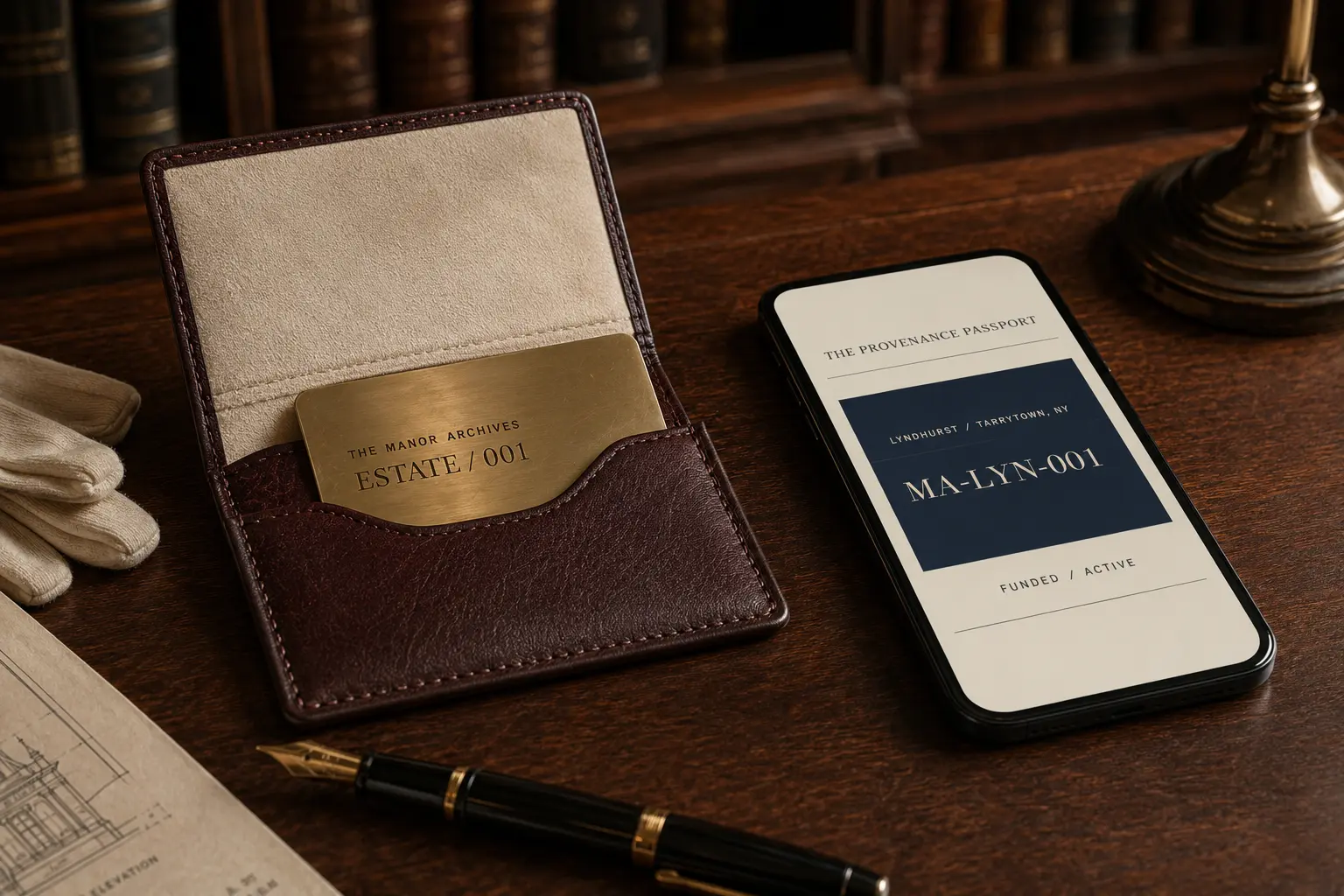
BRASS REGISTRY / NFC + QREVERY OBJECT
01SOURCE 02MAKING 03IMPACT 04ACCESS
EVERY OBJECT
OPENS A
DEEPER RECORD.
A numbered brass card opens the object’s digital record: source, maker, materials, contribution, and visitor information.
The site, room, object, drawing, or material record behind the piece.
The workshop, artisan, materials, and methods used to make it.
The amount contributed and the restoration project receiving it.
Admission and public programs, with digital records linked to the source site.
FUNDING MODELTHE MANOR RESTORATION FUND / PROPOSED
THE COMMERCIAL RULEMAKE THE
MAKE THE
CONTRIBUTION
VISIBLE.
20%
The proposal directs 20% of gross collection sales to a restricted preservation fund. Final terms, recipients, tax treatment, and reporting would require formal agreements.
70% / PLACES
Restricted grants for roofs, envelopes, interiors, gardens, glasshouses, and urgent stabilization at participating sites.
20% / TRADES
Paid apprenticeships in window restoration, carpentry, masonry, plaster, decorative painting, and textile conservation.
10% / RECORD
Digitization, historical interpretation, public reporting, and limited program administration.
ANNUAL LEDGER
Sales, transfers, grants, apprenticeships, project status, administration, and completed work.
An annual ledger lists collection sales, transfers, grants, apprenticeships, administration, project status, and completed work.
THE HISTORICAL RECORDBEAUTY DOES NOT ERASE HISTORY
THE NON-NEGOTIABLENO HERITAGE
NO HERITAGE
WITHOUT HISTORY.
These estates were shaped by wealth, labor, displacement, and, at some sites, enslavement. The collection cannot use their beauty while ignoring the people who built and maintained them.
- Site historians work with staff and relevant descendant communities on interpretation.
- Product stories distinguish documented evidence from contemporary adaptation.
- Formal agreements license names and objects, including rooms, with credits.
- Every private salon funds a public access day, and preservation needs outrank spectacle.
LAUNCH CHANNELSPRESS / DIGITAL / RETAIL / REPORTING
THE RECORD
Editors receive source files and conservator interviews, with the complete funding formula.
THE PASSPORT
Object records, films, workshop notes, grant updates, and visitor information remain available after launch.
THE ROOM
888 Madison and estate salons display the materials alongside their sources. Open-house days give the public access.
THE LEDGER
The public record follows the money from each sale to the work completed on site.
RESEARCHOFFICIAL SOURCES / SITES / COLLECTIONS / GRANTS
RALPH LAUREN / BRANDSOFFICIAL BRAND PORTFOLIO ↗NATIONAL TRUST / SITES27 HISTORIC PLACES OPEN TO THE PUBLIC ↗NATIONAL TRUST / COLLECTIONS60,000+ HISTORIC OBJECTS AND WORKS OF ART ↗ARCHIVE CHAPTER / LYNDHURSTGOTHIC REVIVAL HOUSE AND ORIGINAL DECORATIVE ARTS ↗ARCHIVE CHAPTER / FILOLIHOUSE, GARDENS, ORCHARD, AND PUBLIC GROUNDS ↗ARCHIVE CHAPTER / KYKUITINTERIORS, FURNISHINGS, ART, AND GARDENS ↗NATIONAL TRUST / GRANTSPRESERVATION FUNDING PROGRAMS ↗NATIONAL TRUST / HOPE CREWBUILDING THE FUTURE OF HISTORIC TRADES ↗
THE SOURCE
STAYS WITH THE OBJECT.
Each piece credits its source and maker. Its sale helps pay for preservation at the place that inspired it.
LIVE WITH HISTORY. KEEP IT STANDING.Independent personal concept by Priscilla Rios. This project is not affiliated with, commissioned by, approved by, or endorsed by Ralph Lauren Corporation, Ralph Lauren Home, the National Trust for Historic Preservation, or any historic site. All products, partnerships, percentages, events, interfaces, and funding structures shown are speculative.