START WITH RECOGNITION
Introduce a familiar behavior first. Once people recognize the feeling, the word gives them a precise way to name it.

CAMPAIGN STRATEGY / PRODUCT UX / CREATIVE DIRECTION / INTEGRATED MEDIA
WHERE I STARTED
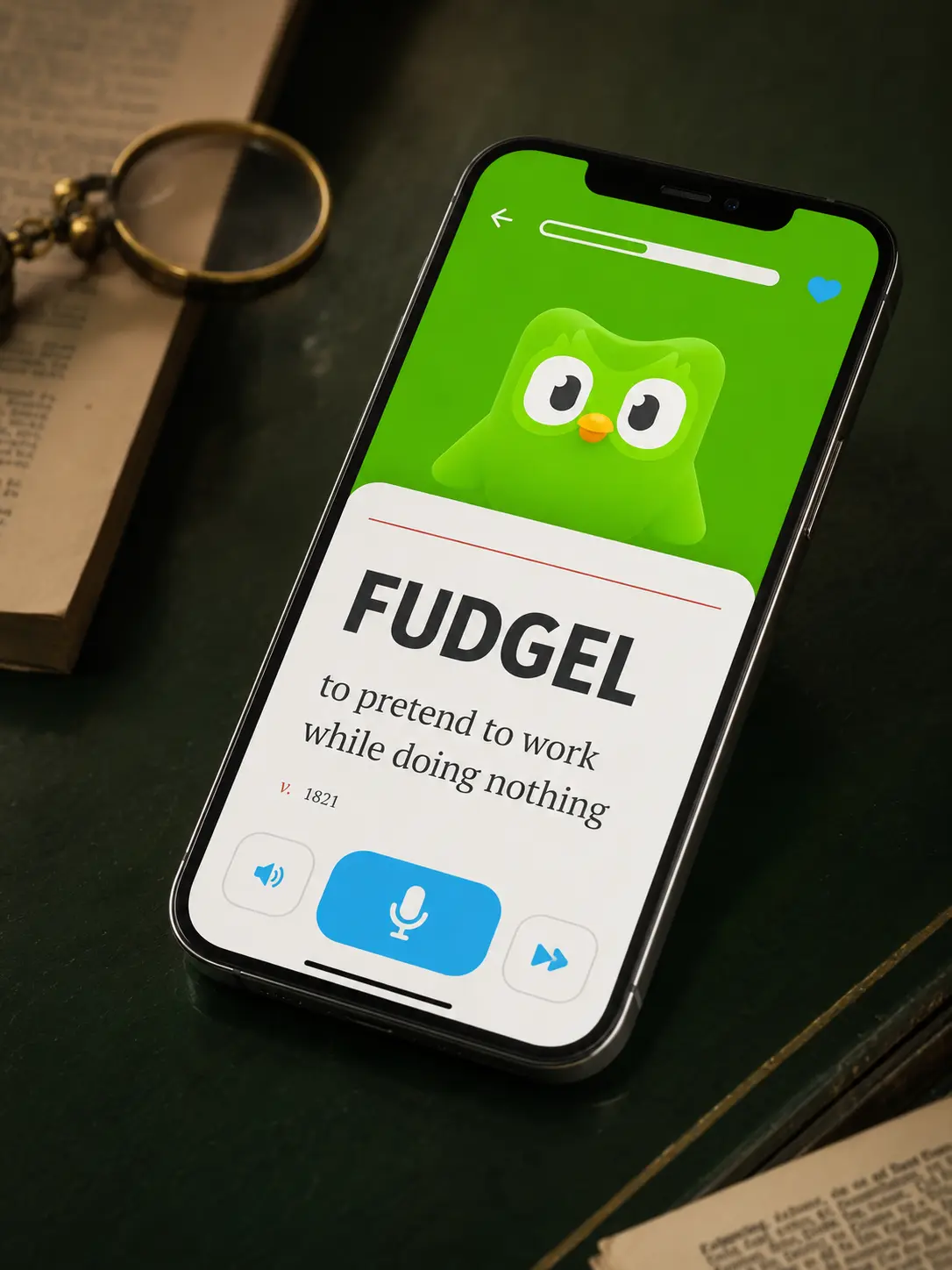
A forgotten word is easy to admire and forget again. I wanted this campaign to give it a use. Duolingo supplies the habit of short practice, while Merriam-Webster supplies the definition and context. The challenge was keeping the history interesting without making the lesson feel like homework.
“Modern behavior is not new. We simply forgot the words for it.”
WORKING THROUGH IT
Introduce a familiar behavior first. Once people recognize the feeling, the word gives them a precise way to name it.
Duolingo supplies the short practice sessions. Merriam-Webster supplies a definition and source, with pronunciation close at hand.
Lessons end by asking people to use the word through a social prompt or workplace translation. Live challenges offer another way to practice. Recall helps, but adoption is the goal.
The Living Dictionary tracks learning and correct usage by location, letting people watch a word return to public conversation.
THE IDENTITY
Duolingo's bright colors frame clear actions and familiar learning patterns. Merriam-Webster contributes red editorial rules, serif definitions, citations, and usage notes. Historical material supports the lesson within a contemporary interface.
Speak the other half of it.
THE VISUAL LANGUAGE
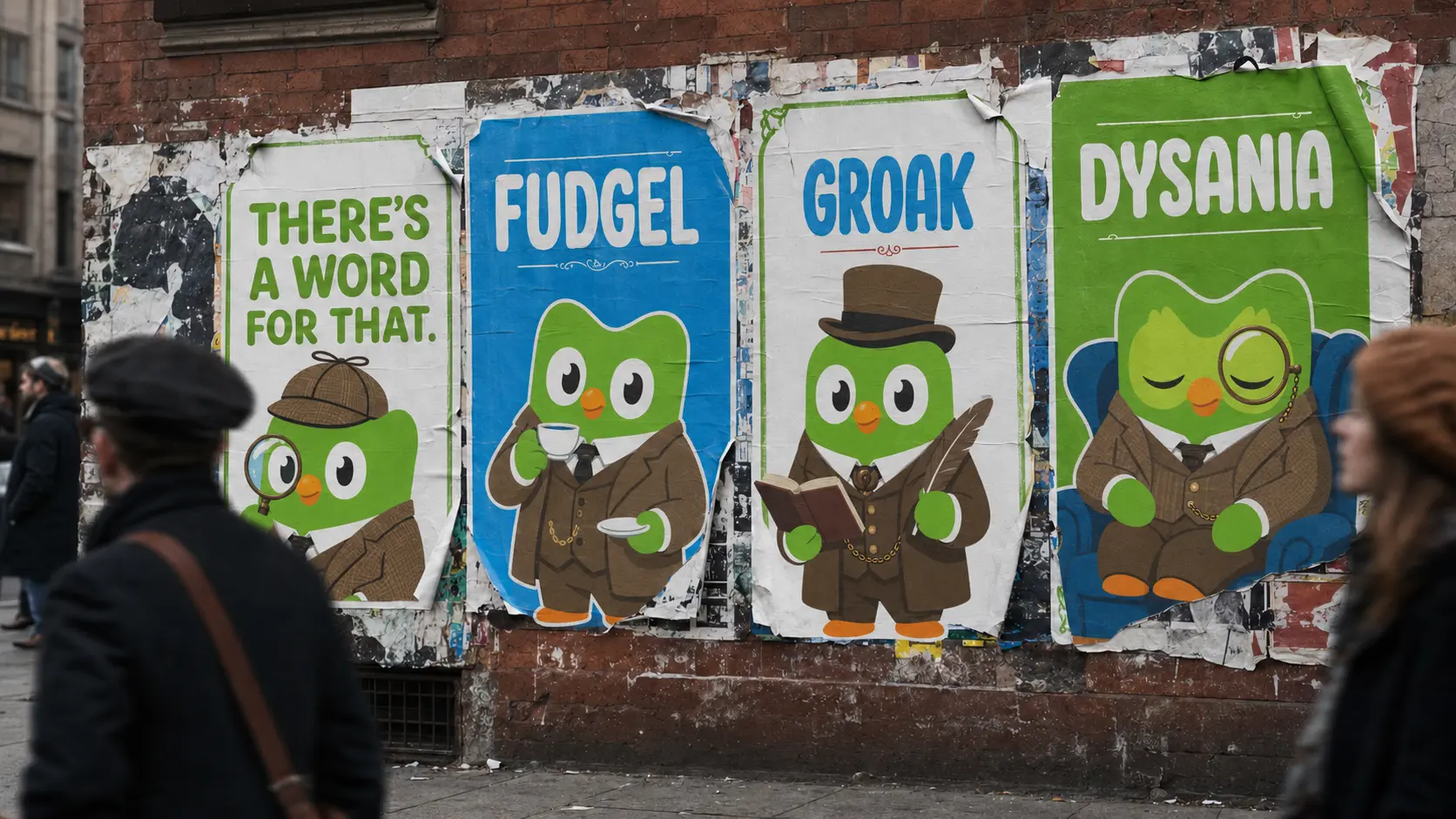
Make the word large enough to catch someone on the subway. A short modern example explains why they might use it. On the phone, the definition can open into source notes and practice.
EXPERIENCE
A view or share does not tell us whether someone learned the word. The pilot would need to check recall and correct use later, including whether people keep using it.
Short scenario-led lessons teach meaning, pronunciation, roots, register, and correct use without turning the interface into a history textbook.
A daily speed round replaces corporate fog and internet shorthand with precise words for social irritations.
A public data experience shows which words are being learned, correctly used, shared, and revived by city and community.
A transparent measurement model separates reach from learning: discovery, lesson completion, unaided recall, correct usage, and sustained adoption.
The word has to survive beyond the lesson. Check whether people remember it and use it correctly later. Impressions can show reach, but they cannot answer that question.
Duolingo supplies short practice and a reason to return. Merriam-Webster supplies definitions and usage evidence. The campaign depends on those different contributions working together.
Practice loops, character humor, streaks, notifications, progression, and a global learner community.
MAKES LANGUAGE MOVE.Definitions, pronunciations, usage notes, editorial review, citations, and historical evidence.
MAKES LANGUAGE TRUE.Definition, pronunciation, usage evidence, and editorial note supplied by Merriam-Webster.
Start with a situation the learner recognizes. Introduce the word, then let them try it in context. The source card stays available for anyone who wants the history.
Comprehension before terminology.
Register explains when the word helps.
The lesson ends with application.
Words are organized around situations people recognize today. The course can expand across work, relationships, online behavior, emotional precision, elegant insults, and useful word roots.
PRETENDING TO WORK
ADD TO COURSE →WATCHING SOMEONE EAT
ADD TO COURSE →THE UNSOLICITED EXPERT
ADD TO COURSE →DIFFICULTY RISING
ADD TO COURSE →The campaign feels like Duolingo escaped the phone: bright, character-led, quick to read, and built around one satisfying discovery.

 Someone giving confident opinions outside their expertise?
Usage matters. The definition card provides pronunciation, register, historical evidence, and guidance on when the word is appropriate.
Duo diagnoses the modern behavior. Merriam-Webster verifies the word.
Thy streak is in grave peril.
01Duo has observed eight hours of clinomania.
02Do not be an ultracrepidarian. Learn before posting.
03A learned word lights up on the proposed public display. Correct use adds to its record. The installation needs a visible explanation of what those signals measure.

Target number of editorially verified entries.
Discovery, completion, recall, and correct use.
Proposed window for measuring repeat use.
The media plan starts with noticing a word and learning its meaning. Each channel then helps people use it without assistance.
A familiar modern behavior creates instant self-recognition.
The forgotten word arrives as the punchline and the solution.
Scenario, sound, roots, register, and recall build usable knowledge.
A contextual challenge asks the learner to deploy the word correctly.
People share examples of using the word correctly.
These are outside research findings, not campaign results. They identify literacy needs and declining reading for pleasure, with evidence for a learning method. The campaign would need its own tests of recall and correct use.
of U.S. fourth graders performed at or above NAEP Proficient in 2024. SOURCE ↗
of 13-year-olds reported reading for fun almost every day in 2025, down from 27% in 2012. SOURCE ↗
appear in Duolingo’s published longitudinal language-learning research dataset. SOURCE ↗
Duolingo’s learning path uses spaced repetition to revisit material over time. SOURCE ↗
Set success thresholds in advance for 7-day unaided recall and contextual accuracy. Add 30-day repeat use to measure retention. Report these outcomes separately from impressions and course starts.
VERIFY THE ENTRY. Every word requires dictionary evidence, a clear definition, pronunciation, usage status, and an editorially approved explanation.
LABEL THE REGISTER. Archaic, rare, dialectal, historical, and obsolete are not interchangeable. The learner should know the difference.
AVOID FALSE PROMISES. The campaign supports vocabulary curiosity and practice. It does not claim one course can solve literacy inequity.
WHERE THE CONCEPT STANDS
The concept follows a word from the first encounter into practice and repeat use. Posters make the behavior recognizable. The lesson gives people a chance to use it correctly. Recall and later use are proposed measures for a pilot, not results the campaign has already achieved.