
LAT: 28.5721° NLON: 80.6480° WALT: 0 FT
Independent Creative Exploration// DARK MATTER GRID / CASE STUDY P29
BEFORE WE RUN OUT OF ROAD.READ THE BRIEF ↓
INDEPENDENT SPECULATIVE PORTFOLIO EXERCISE / NOT AFFILIATED
LAUNCHEDITION.
WE RUN OUT OF AIRBEFORE WE RUN OUT OF ROAD.READ THE BRIEF ↓
 911 GT3 RS / LAUNCH EDITIONMACH 0 TO ORBIT.
THE CHALLENGEWEISSACH → ATMOSPHERE → TRACK
THE SHARED ADVERSARYAIR IS
AIR IS
NEVER JUST
EMPTY SPACE.
I began with the forces the car has to manage. Aerospace offered a reference for thinking about heat and pressure, as well as the information a driver needs under load. I used that reference to develop an independent GT3 RS study. The proposed material changes are design directions, not verified performance improvements.
THE IDEAThe Launch Edition study follows heat and pressure through the car. Materials address those forces, while the cockpit shows the information a driver would need. The performance directions still need engineering validation.
ACT I / THE PHYSICAL TRUTHTWO MACHINES.
ONE ATMOSPHERE.
ONE ATMOSPHERE.
Airflow puts both machines under load. The campaign follows how each one manages that pressure.
100 KM / KÁRMÁN LINE0 FT / SEA LEVEL
01 / SLSTHRUST ↑
02 / GT3 RSDOWNFORCE ↓
AIRTHE SHARED ADVERSARY
ρ 1.225 KG/M³DRAG / HEAT / GRAVITYSYS / ACTIVE
MISSION RESEARCH / ARTEMISLAUNCH COMPLEX 39B → ACTIVE AERO
THE OTHER MACHINEBEFORE THE CAR,
BEFORE THE CAR,
WE STUDIED
THE LAUNCH.
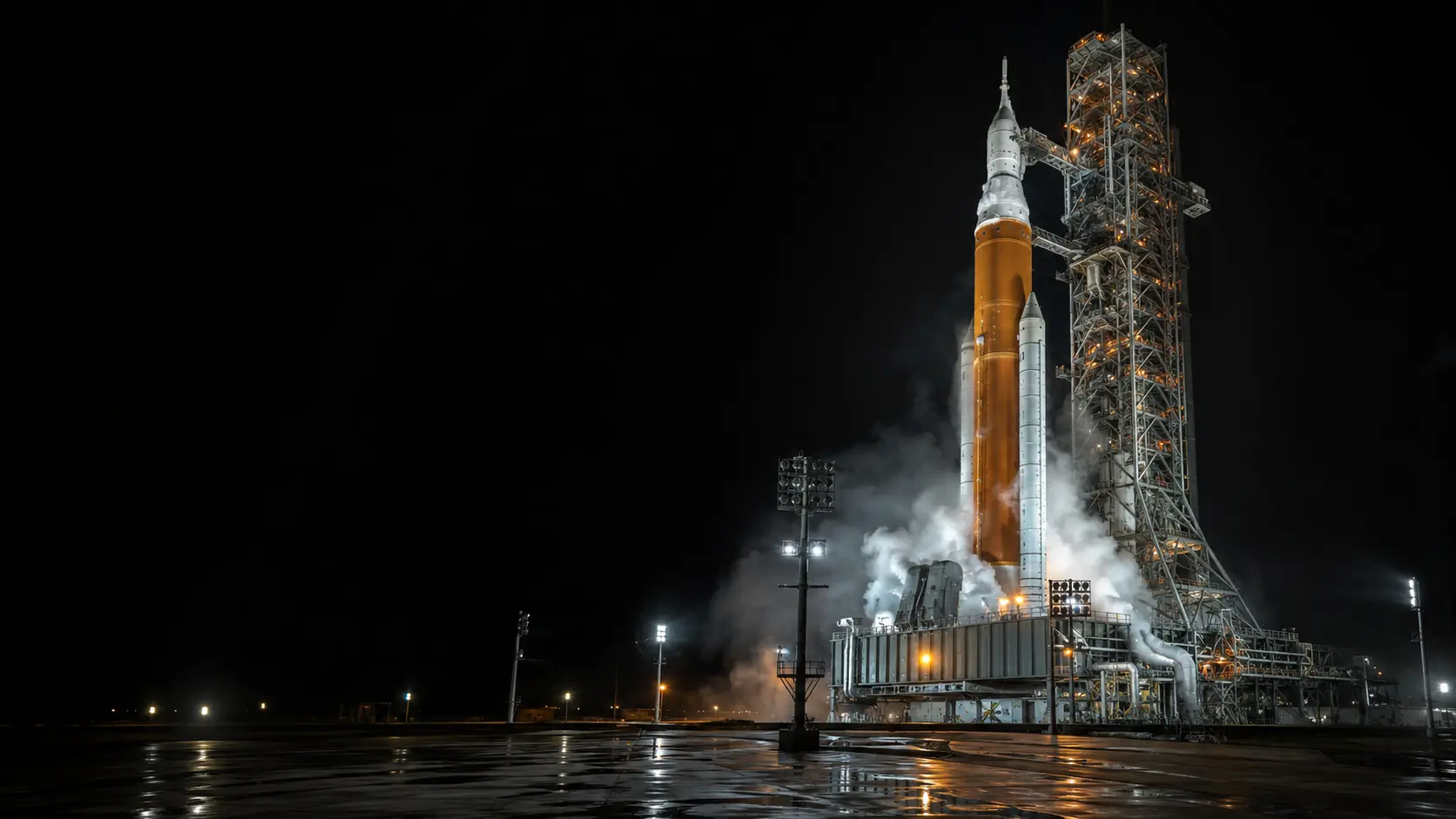
Artemis defines the operating environment behind the concept. SLS and Orion stand at Launch Complex 39B. Ground systems manage extreme pressure and heat. Mission control turns thousands of changing conditions into clear decisions.
PRESSURE
SLS moves through a changing atmosphere. The GT3 RS shapes pressure above and beneath the body to generate usable load.
HEAT
Launch architecture manages cryogenic and combustion extremes. The car applies those lessons to solar gain and exhaust shielding, with protection for the drivetrain.
TELEMETRY
Mission control converts system states into decisive signals. The cockpit reduces track data to the information a driver can act on at speed.
VISIBILITY
Operational orange identifies critical interfaces and release points, including active components.
NASA public research is referenced here for educational and conceptual study. No NASA identity appears as a product mark, and no affiliation or endorsement is implied.
OFFICIAL ARTEMIS PROGRAM ↗THE STRATEGYREAD THE RULES BEFORE MAKING THE SYSTEM
THE COLLABORATION COULD NOT BE BRANDED AS ONE.THE LIMIT
THE LIMIT
BECAME PART
OF THE IDEA.
NASA does not endorse commercial products or co-branded merchandise, including “NASA x Brand” constructions. That rule shaped the project from the start.
NASA standards and public mission data inform the study alongside aerospace research. They provide source material without implying endorsement. NASA identifiers stay out of the product lockup and advertising, including merchandise. Porsche remains the product brand.
The restraint became useful. It forced every aerospace reference to work harder than a logo.
PROPOSED FIRST EDITION
Give the driver one question about air.
The Launch Edition begins with a proposed showroom film and one airflow demonstration. I would use those to test whether the aerospace reference helps a driver understand the idea. The vehicle and watch designs remain the later product studies.
- THE FIRST OFFER
- One existing showroom counter with a specialist-reviewed explanatory model. A short film connects the launch reference to the car’s subject. The first presentation makes no claim that the proposed materials improve performance.
- HOW YOU TAKE PART
- The campaign image leads to the film. A host walks through the airflow model, then a labeled interface shows one change. A take-home engineering card separates the public reference from the independent design proposal.
- WHAT I WOULD DELIVER
- The film storyboard and a readable demonstration graphic, with one interface sequence and the counter card. The first task is to communicate the connection clearly. Material specifications would require engineering work beyond that package.
- BEFORE IT GROWS
- Can a visitor describe the idea without repeating aerospace jargon? Review every performance statement with a specialist. Use the demonstration to choose which proposed product detail deserves development next.
Where it could go next
The complete vehicle, telemetry and Meridian object designs stay below. Each is a separate development brief after the communication study. A track experience follows a participating operator and validated equipment.
THE SYSTEMEVERY REFERENCE MUST DO WORK
ACT II / THE ENGINEERING EXCHANGETHE IDEA MOVES
THE IDEA MOVES
FROM REFERENCE
TO FUNCTION.
FUNCTION BEFORE LIVERY
Every visible choice must address a track problem: heat, drag, downforce, weight or driver information.
RESEARCH, NOT ENDORSEMENT
NASA standards and public aerospace research inform the concept. NASA marks never appear on the product or campaign.
DATA AS IDENTITY
Mission clocks and serial numbers anchor the graphics, with pressure deltas supplying the live information. Decoration stays secondary.
PROOF BEFORE SPECTACLE
Wind-tunnel tests guide material choices. Live telemetry supplies the evidence for the campaign.
MATERIAL SCIENCEHEAT / AIR / WEIGHT / TRACEABILITY
THERMAL MATTE WHITE
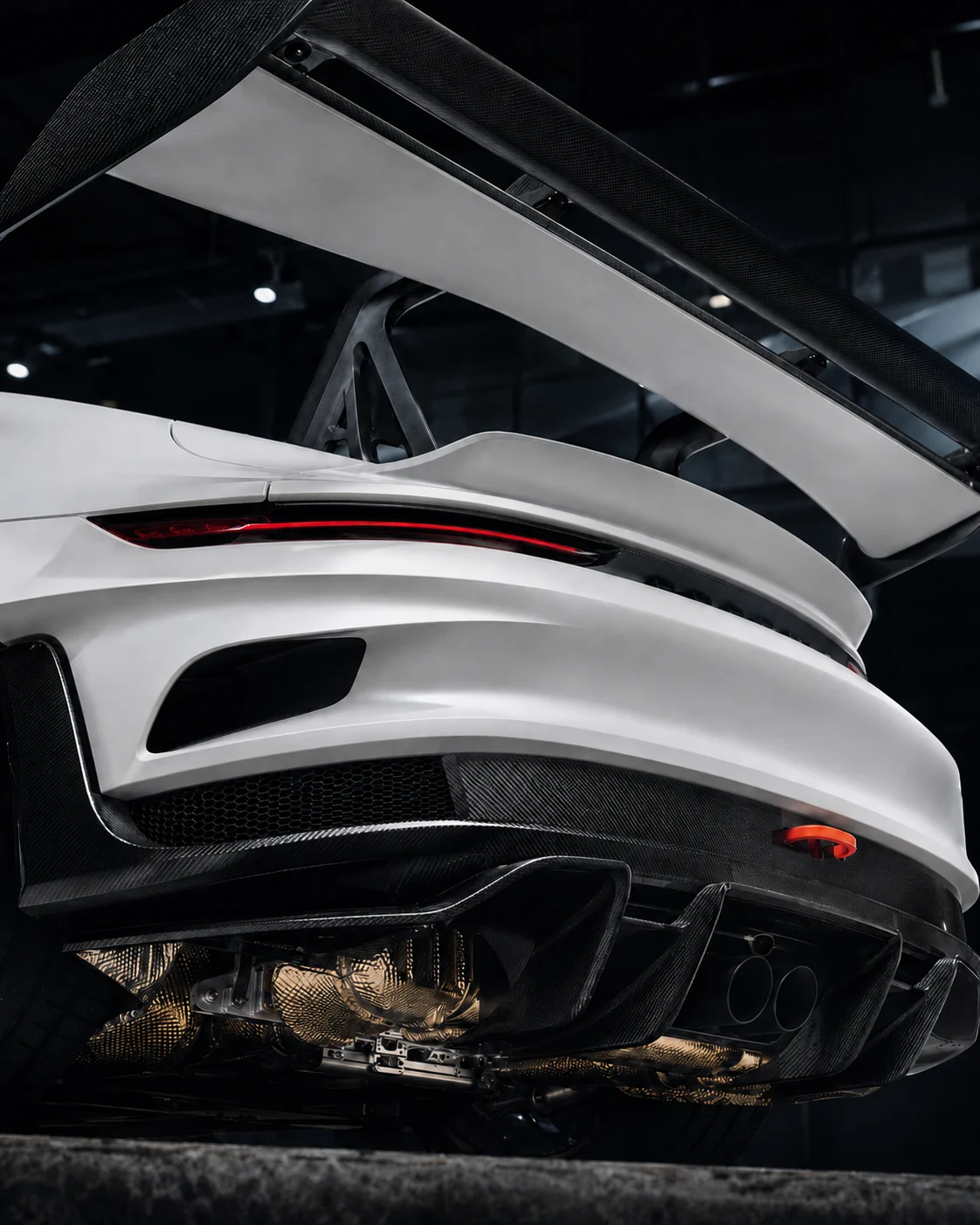
A proposed ceramic-filled, low-emissivity coating designed to reduce solar heat absorption during exposed track sessions.
ORION ORANGE
High-visibility color is reserved for active aero, center locks, release points and driver-critical controls.
METALLIZED POLYIMIDE
A protected, MLI-inspired thermal barrier isolates exhaust heat beneath the rear diffuser. It is not described as literal gold foil.
CARBON + SERIAL
Laser-etched identification replaces oversized mission graphics. ARTEMIS-911-001 identifies the exact specification.
COCKPIT SYSTEMLAUNCH CONTROL / REINTERPRETED
DATA WITH
A DRIVER.
Launch Control shifts the instrument cluster into a focused telemetry mode. The central tachometer becomes a burn sequence. Tire pressure appears as a target delta. Drivers can read G-force and temperature at speed, with aero state visible alongside.
Keep the track information readable in the cockpit. The mission-control reference should help organize it.
ARTEMIS-911-001T− 00:00:03.2LAUNCH CONTROL
8.4RPM × 1000
STAGE / BURNREADY
THE CAMPAIGN IDEA60 SECONDS / ZERO MUSIC
ACT III / IGNITIONFIRST, SILENCE.
FIRST, SILENCE.
THEN, THE AIR
BREAKS.
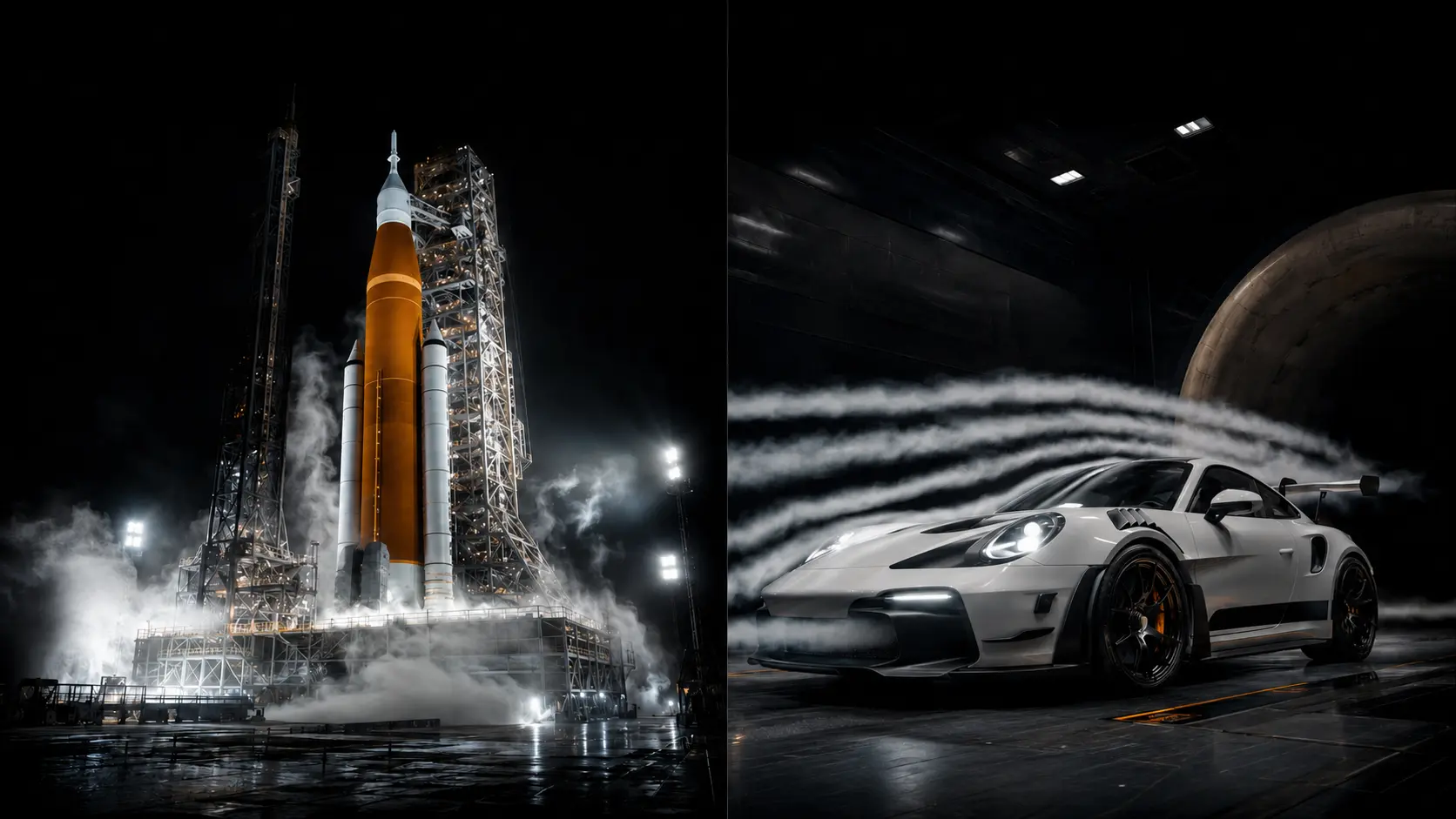 SLS / CRYOGENIC VENTING | GT3 RS / ACTIVE AERO
THE DRAG COEFFICIENTWE RUN OUT OF AIR
BEFORE WE RUN OUT OF ROAD.MACH 0 TO ORBIT.
BEFORE WE RUN OUT OF ROAD.MACH 0 TO ORBIT.
00:00 / TURBINE HUM00:31 / PROCEDURE00:52 / FLAT-SIX01:00 / CUT
CAMPAIGN KEY VISUALARTEMIS / ACTIVE AERO / NIGHT

LAT: 28.5721° N | LON: 80.6480° WSYS: LAUNCH CONTROL ACTIVEALT: 0 FT
WE RUN OUT OF AIRBEFORE WE RUN OUT OF ROAD.
MACH 0 TO ORBIT.PORSCHE 911 GT3 RS / LAUNCH EDITION
ACTIVATION SYSTEMPRODUCT → PROOF → EXPERIENCE
NO LAUNCH
WITHOUT PROOF.
The wind-tunnel film shows the load. The proposed runway session would examine stability, with connected data recording each pass. Track equipment follows the same heat and visibility questions.
THE DRAG COEFFICIENT
A 60-second split-screen film pairs launch-site stillness with a GT3 RS under load in a wind tunnel. No score. Turbines and radio procedure mix with a flat-six at redline.
DYNAMIC PROOF RUN
A proposed high-speed stability run uses the 15,000-foot Launch and Landing Facility runway. It requires operator and site approval, plus safety review. Ground-control monitors display aerodynamic data from each pass.
THE MERIDIAN CAPSULE
A Porsche Design chronograph and FIA-certified track suit carry the system into bead-blasted titanium, Nomex, high-visibility controls and countdown functions.
PUBLIC MISSION DATA
PCM pulls approved public countdown and mission data during active launch windows using a network connection.
WEARABLE CAPSULETRACK EQUIPMENT / OBJECTS / APPAREL
THE MERIDIAN CAPSULETHE SYSTEM
THE SYSTEM
LEAVES THE CAR.
NOT THE MISSION.
The capsule carries the car's thermal and visibility requirements into wearable track equipment, using the same material system.
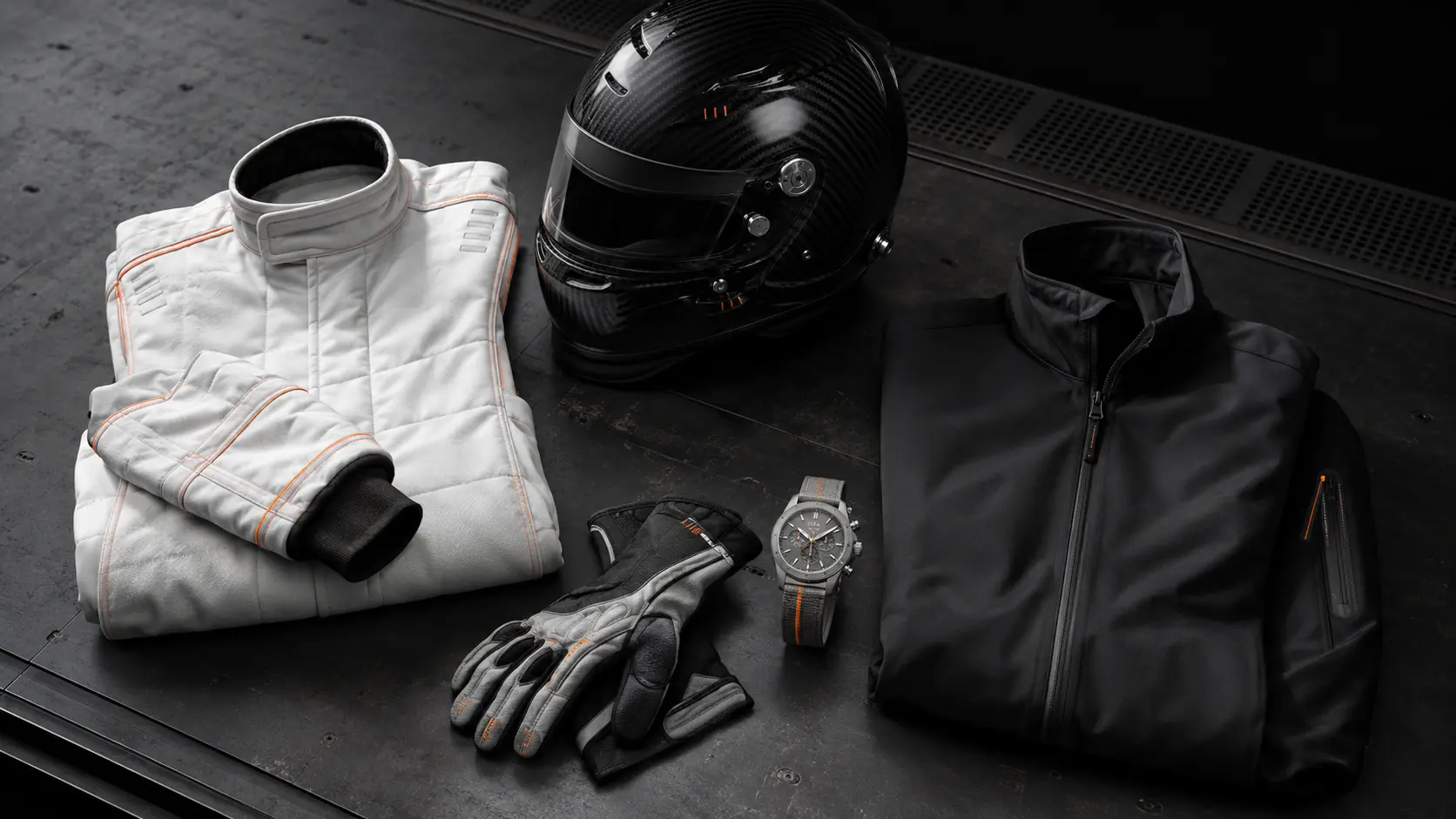
THERMAL WHITE
The racing suit combines flame-resistant construction with articulated movement. High-visibility seams make the car's design language readable on the body.
MISSION TIME
A lunar-grey dial sits in bead-blasted titanium, with a technical textile strap bringing the countdown function to the wrist.
CREW SYSTEM
A black utility jacket shares the orange control details with the carbon helmet and technical gloves.
FINAL FRAMEA CONCEPT
A CONCEPT
THAT RESPECTS
THE BOUNDARY.
Launch Edition began with a collaboration Porsche and NASA could not formally brand. That limit clarified the work. Aerospace research shapes the materials and interface, with a campaign that makes no NASA product claim.
This is a personal, self-initiated speculative portfolio exercise created solely to demonstrate independent strategy, design and art direction. It is not a real collaboration, commercial release or announced product. It is not affiliated with, endorsed by, commissioned by, approved by or produced in partnership with Porsche, NASA, the Artemis program, Kennedy Space Center or Space Florida. All product specifications, interfaces, campaign materials and activations shown here are conceptual proposals.