DSN / SIGNAL ACQUISITIONONE-WAY LIGHT TIME / ACTIVE
Independent Creative Exploration// DARK MATTER GRID / INDEPENDENT CASE STUDY P30THE SIGNAL
OMEGA SPEEDMASTER
DEEP SPACE TELEMETRY CONCEPTENTER THE SIGNAL ↓
PERSONAL DESIGN EXPLORATION / NOT AFFILIATED OR ENDORSED
THE SIGNAL
BETWEEN SECONDS.
OMEGA SPEEDMASTERDEEP SPACE TELEMETRY CONCEPTENTER THE SIGNAL ↓
ΩTIME TRAVELS.
THE OPPORTUNITYMECHANICAL TIME → INTERPLANETARY TIME
THE PHYSICAL TRUTHTIME DOES
TIME DOES
NOT ARRIVE
ALL AT ONCE.
OMEGA has already measured time on the Moon. This concept builds the next watch around the time information takes to cross space.
THE IDEAThe Deep Space Network gives distance a duration. That delay shapes a watch complication and the campaign around it, with an experience for collectors.
EARTH RECEIVED TIME / SPACECRAFT EVENT TIMEONE SIGNAL.
ONE SIGNAL.
TWO MOMENTS.
A spacecraft transmits an event. Earth receives it later. The distance between those moments becomes the campaign.
PROPOSED FIRST EDITION
Read one signal before designing the movement.
The first edition would be a tabletop signal-delay demonstration in an existing watch boutique. A selected mission example explains the two moments. The watch design then has a clear reading task to answer.
- THE FIRST OFFER
- One proposed digital dial study, with a labeled mission example and an explanatory card. Use a fixed snapshot with a named public source. No live feed or working mechanical complication is needed for this first communication test.
- HOW YOU TAKE PART
- The film introduces the wait. The visitor selects the example and reads when a signal left and when it would arrive. A host explains the delay before showing the proposed watch display.
- WHAT I WOULD DELIVER
- The dial reading sequence and mission card, with a short campaign storyboard and packaging study. Keep units and source dates visible. A paper or screen prototype can test what the wearer understands.
- BEFORE IT GROWS
- Can someone read the two times and explain the interval? Test an unfamiliar example as well as the hero mission. A watchmaker would assess any later movement proposal separately.
Where it could go next
The watch and retail control-room designs remain in the case. Their engineering and larger launch follow proof that the reading makes sense. Further mission editions use the same source record.
STRATEGIC FOUNDATIONDEEP SPACE NETWORK / PUBLIC RESEARCH
THE NETWORK
THAT KEEPS
TIME MOVING.
NASA's Deep Space Network uses antenna complexes in California and Spain, with Australia completing the network as Earth rotates. It commands spacecraft and receives telemetry, tracking signals too faint for ordinary systems to detect.
The concept uses that public system as research. It claims no direct JPL participation or private mission data, and no NASA endorsement.
TIME HAS DISTANCE
The campaign begins with one physical fact: a signal from deep space does not arrive instantly.
OMEGA LEADS
Swiss mechanical precision remains the product story. Aerospace research gives that precision a new scale.
PUBLIC DATA ONLY
The experience uses public mission information and DSN references. It never implies private mission access.
UTILITY BEFORE AESTHETIC
Every telemetry reference must explain time, distance, signal state or watch function.
THE PRODUCT IDEADEEP SPACE TELEMETRY CONCEPT
THE INDISPENSABLE FEATURETHE SIGNAL
THE SIGNAL
DELAY.
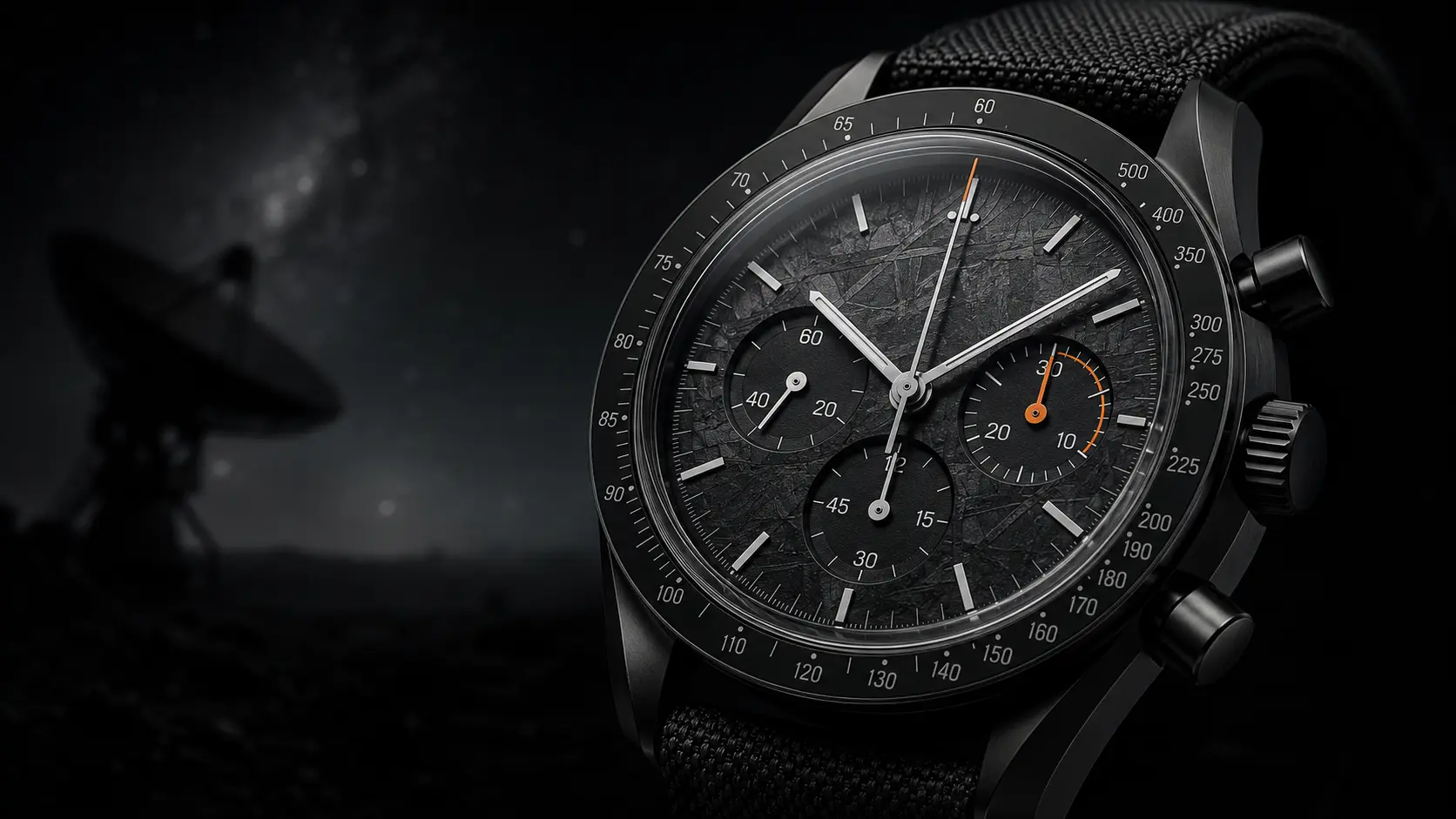
I kept the familiar Speedmaster structure and gave one subdial a different subject: the time between a spacecraft event and its reception on Earth. The display is a proposed complication. How a wearer sets and reads it needs to be resolved before it could become an engineered watch.
ONE-WAY LIGHT TIME08:19MIN / SECSIGNAL ACQUIRED
HOW IT WORKS / FIVE-SECOND READTHE WATCH DOES NOT RECEIVE A SPACECRAFT SIGNAL. THE COMPANION EXPERIENCE USES PUBLIC MISSION DATA TO SET THE DISPLAY.
The moment recorded by the spacecraft.
The travel time published for the selected mission.
The moment the signal reaches the ground station.
A dedicated hand indicates the selected mission’s one-way light time.
The mechanical heartbeat stays visible.
The familiar timing function remains intact.
The owner selects a public mission and transfers the current interval to the watch setting workflow.
SIGNAL DELAY
A proposed display tracks one-way light time between Earth and a selected public deep-space mission.
OBSIDIAN CERAMIC
A matte black ceramic case controls reflection and gives the technical interface a quiet, monolithic frame.
METEORITE STUDY
A dark crystalline dial is proposed with independently documented material provenance. NASA certification is never implied.
ACQUISITION ORANGE
Orange marks signal acquisition and receipt, including handoffs between stations.
PAYLOAD EXPERIENCEINSTRUMENT CASE / COLLECTOR RITUAL
PACKAGED
LIKE AN
INSTRUMENT.
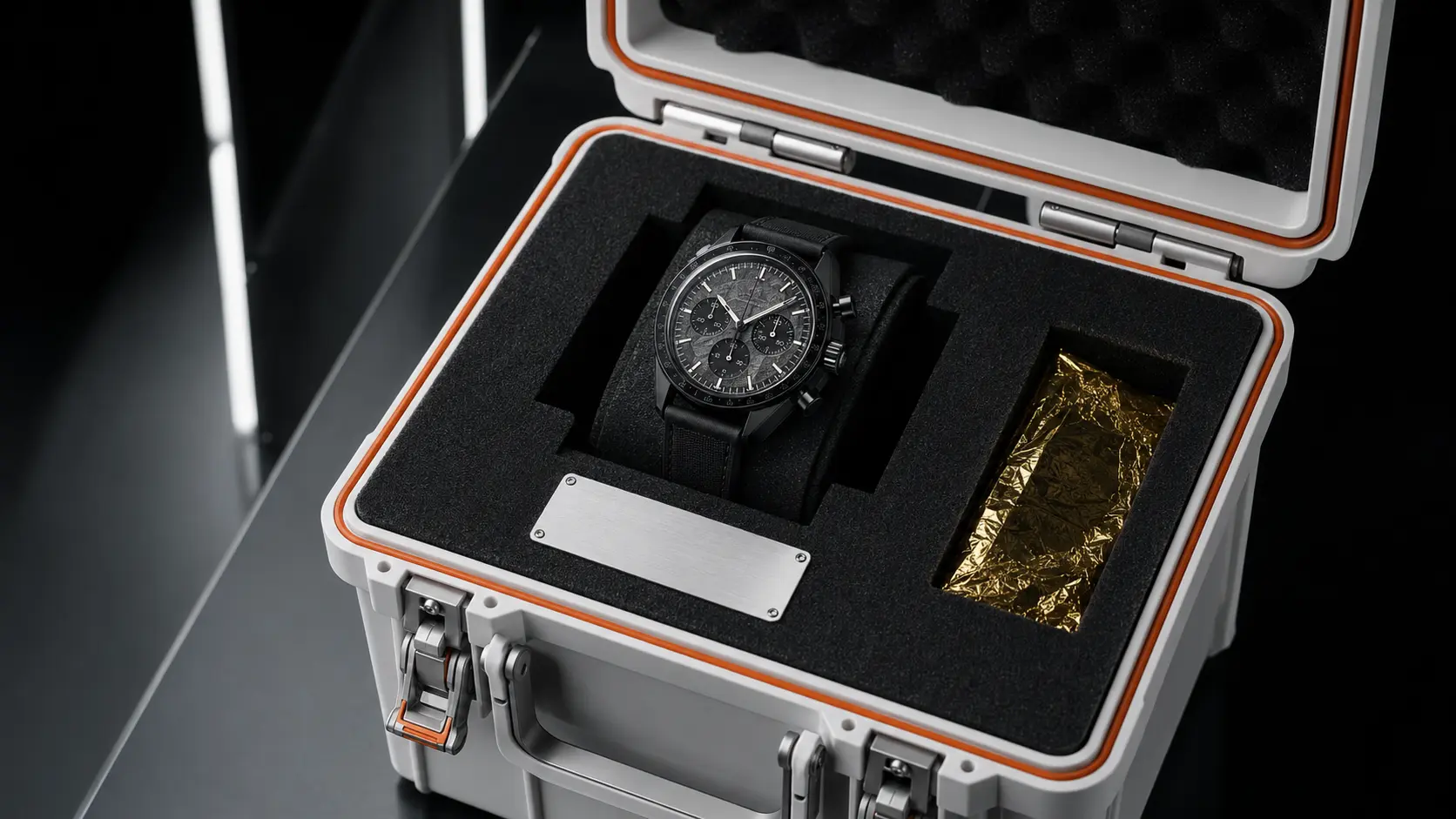
Each layer of the presentation case serves an equipment function, protecting and identifying the watch or activating its companion experience.
RETAIL SYSTEMFLAGSHIP GROUND STATIONS
MISSION CONTROL.
SWISS RESTRAINT.
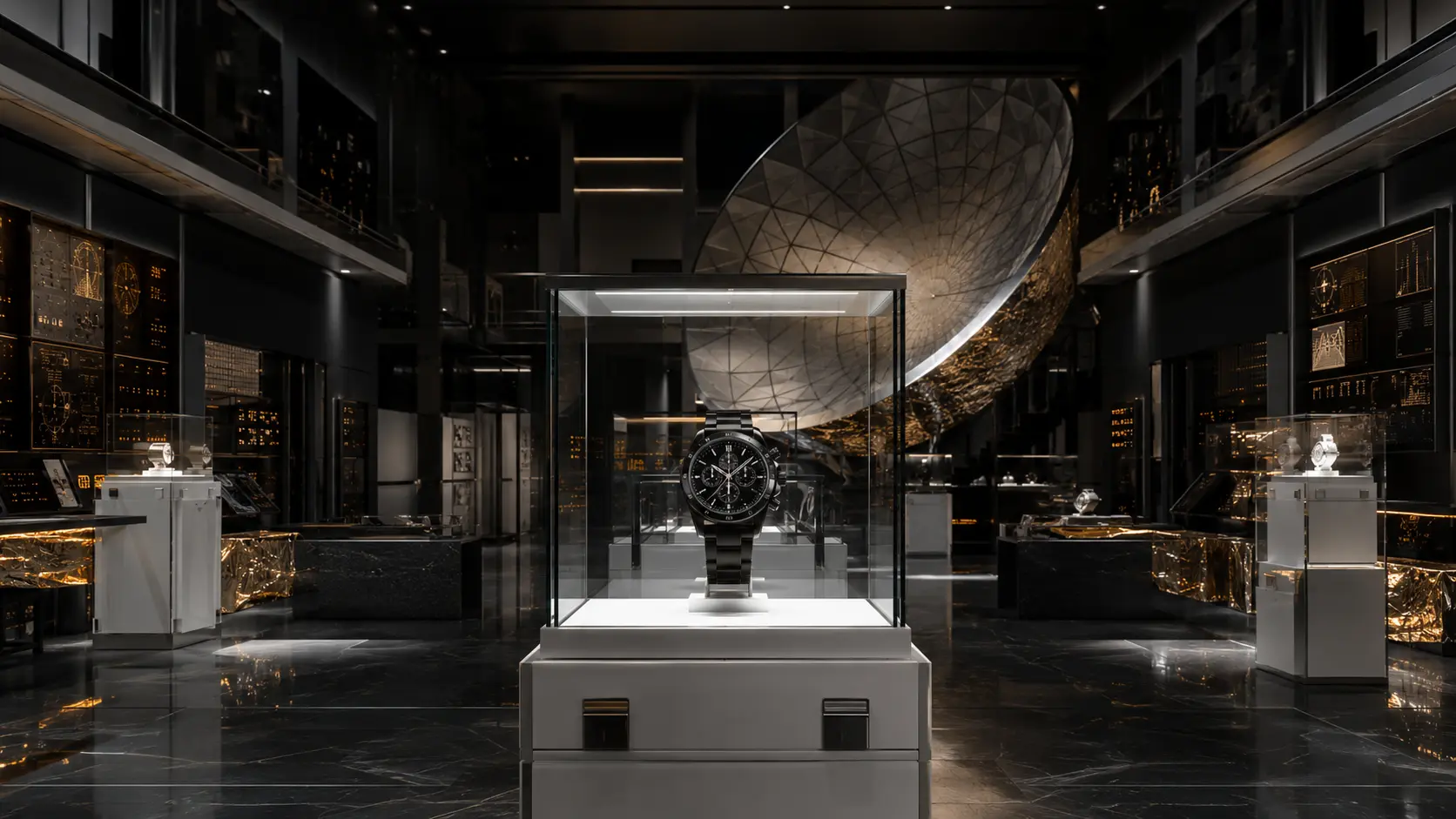
Brushed aluminum and obsidian walls frame the boutique's amber diagnostics. The ground-station setting puts each watch on a white plinth so it stays in focus.
DIGITAL ECOSYSTEMCOSMIC PULSE / PUBLIC DSN DATA
FOLLOW
THE SIGNAL.
NOT THE HYPE.
An NFC card inside the case opens the owner experience. It maps public DSN activity and station handoffs, including light-time delay. The mechanical watch does not receive spacecraft transmissions.
COSMIC PULSE / LIVEACQUISITION 99.82%
EARTHDEEP SPACE / 01
DOCUMENTARY FILM15 MINUTES / MECHANICAL + INTERPLANETARY TIME
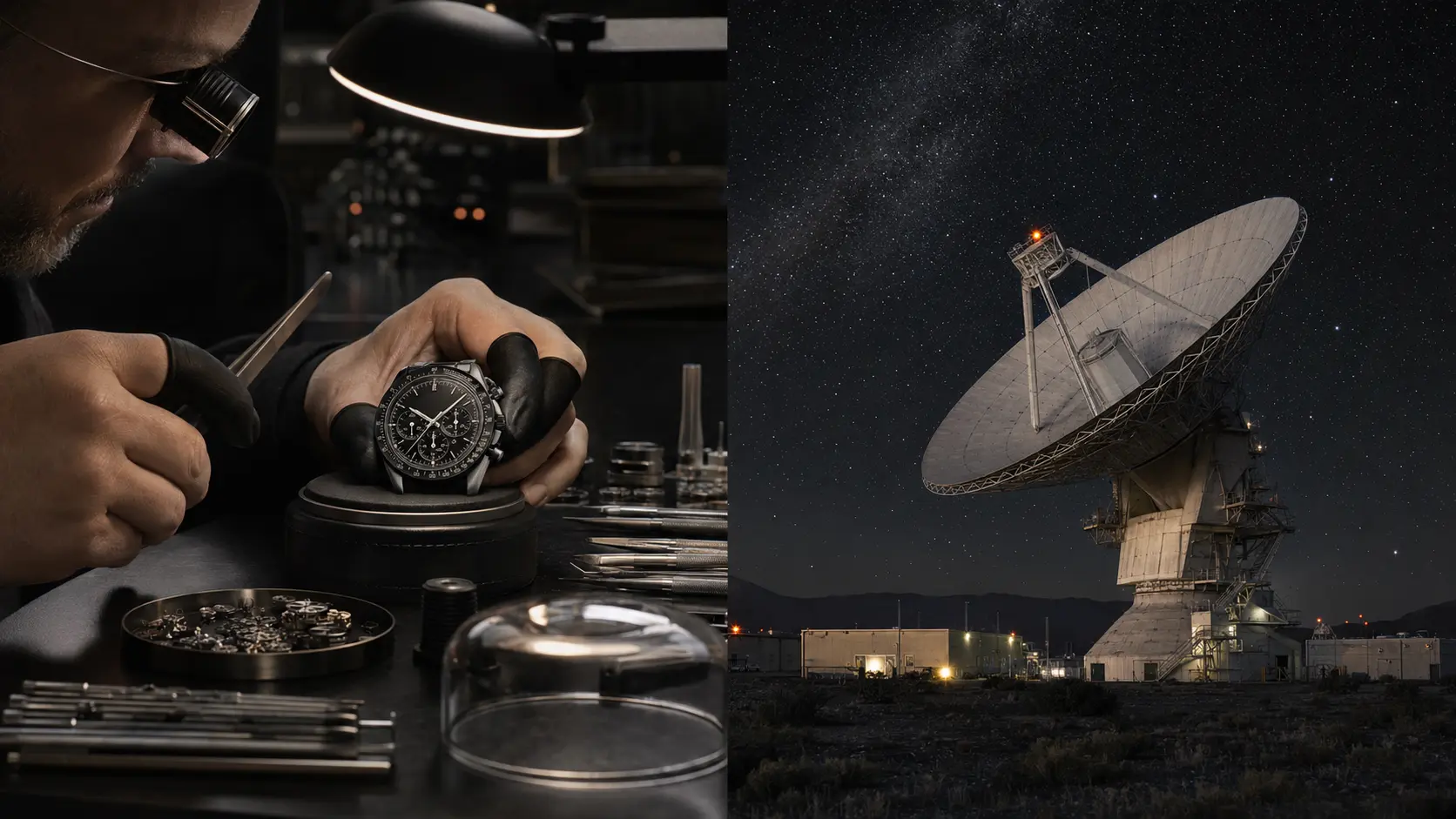
THE DARK SIDE OF THE MOONWATCHTIME
TIME
TRAVELS.
Watchmakers regulate a mechanical movement in Biel. Across the frame, a ground station waits for a signal that has already crossed millions of kilometers.
TELEMETRY & TIME / A CONCEPT FILMCOLLECTOR EQUIPMENTGROUND STATION FIELD SYSTEM
BUILT TO
TRAVEL WITH
THE SIGNAL.
A small equipment system extends the product without turning the project into novelty merchandise. Each object supports storage, wear, access or identification.
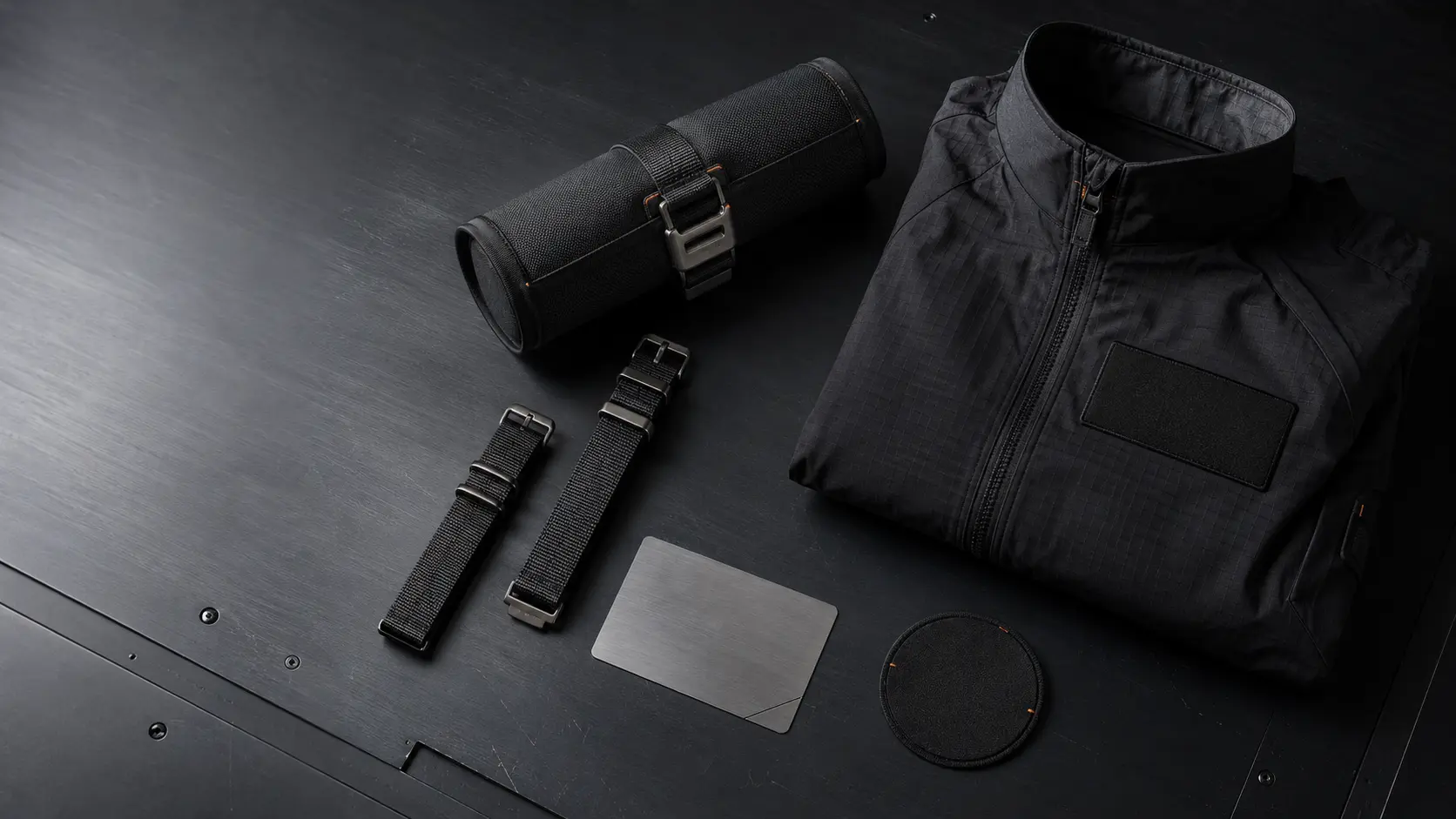
GROUND STATION JACKET
A weather-resistant black shell with orange bartacks and a removable blank identification field. No official mission insignia is used.
NOMEX-STYLE WATCH ROLL
A heat-resistant woven carrier protects the watch and two alternate straps during travel.
STRAP SYSTEM
Titanium hardware joins black technical weave. One orange keeper echoes the signal-acquisition display.
NUMBERED ACCESS CARD
The NFC-enabled metal card opens the Cosmic Pulse experience and records the edition number.
CAMPAIGN ARCHITECTURELAUNCH → RETAIL → DIGITAL → COMMUNITY
FROM SIGNAL
TO SYSTEM.
The launch and owner materials return to the selected mission’s signal delay. Keep that interval readable as the format changes.
GLOBAL SIGNAL ACQUISITION
A synchronized reveal from Biel uses public DSN activity as a live visual layer. The watch appears only after the interface confirms signal acquisition.
MISSION CONTROL BOUTIQUES
Flagships in New York, Geneva, London and Tokyo become ground stations. Brushed aluminum frames amber diagnostics, with watches displayed on white cleanroom plinths.
COSMIC PULSE
An NFC card in the presentation case opens a companion experience showing public DSN activity and active spacecraft links. It also maps one-way light time.
TELEMETRY & TIME
A 15-minute film pairs master watchmakers with the engineering logic of deep-space communication. Mechanical time meets the time required for information to travel.
GROUND STATION CLUB
Owners receive public mission-window briefings and long-form editorial, with access to watchmaking sessions. No classified or privileged mission information is suggested.
LIMITED EDITIONFROM THE
FROM THE
LAST LANDING
TO THE NEXT.
1,972
The proposed edition size honors 1972, the year of Apollo 17 and the final crewed lunar landing of the twentieth century. The number connects OMEGA’s history with the next era of lunar exploration without presenting the concept as an official Artemis product.
FINAL FRAMEA WATCH
A WATCH
FOR THE TIME
BETWEEN WORLDS.
OMEGA measures the interval. The Deep Space Network gives it an astronomical distance to cross, showing the scale and consequence of the delay.
This is a personal, self-initiated speculative portfolio exploration created to challenge my strategy, product thinking, digital design and art direction. It is not a real product, partnership, campaign or announced collaboration. It is not affiliated with, endorsed by, commissioned by, approved by or produced in partnership with OMEGA, Swatch Group, NASA, JPL, the Deep Space Network or the Artemis program. All product specifications, interfaces, packaging, events and experiences shown here are conceptual.