KEEP THE RECOGNITION
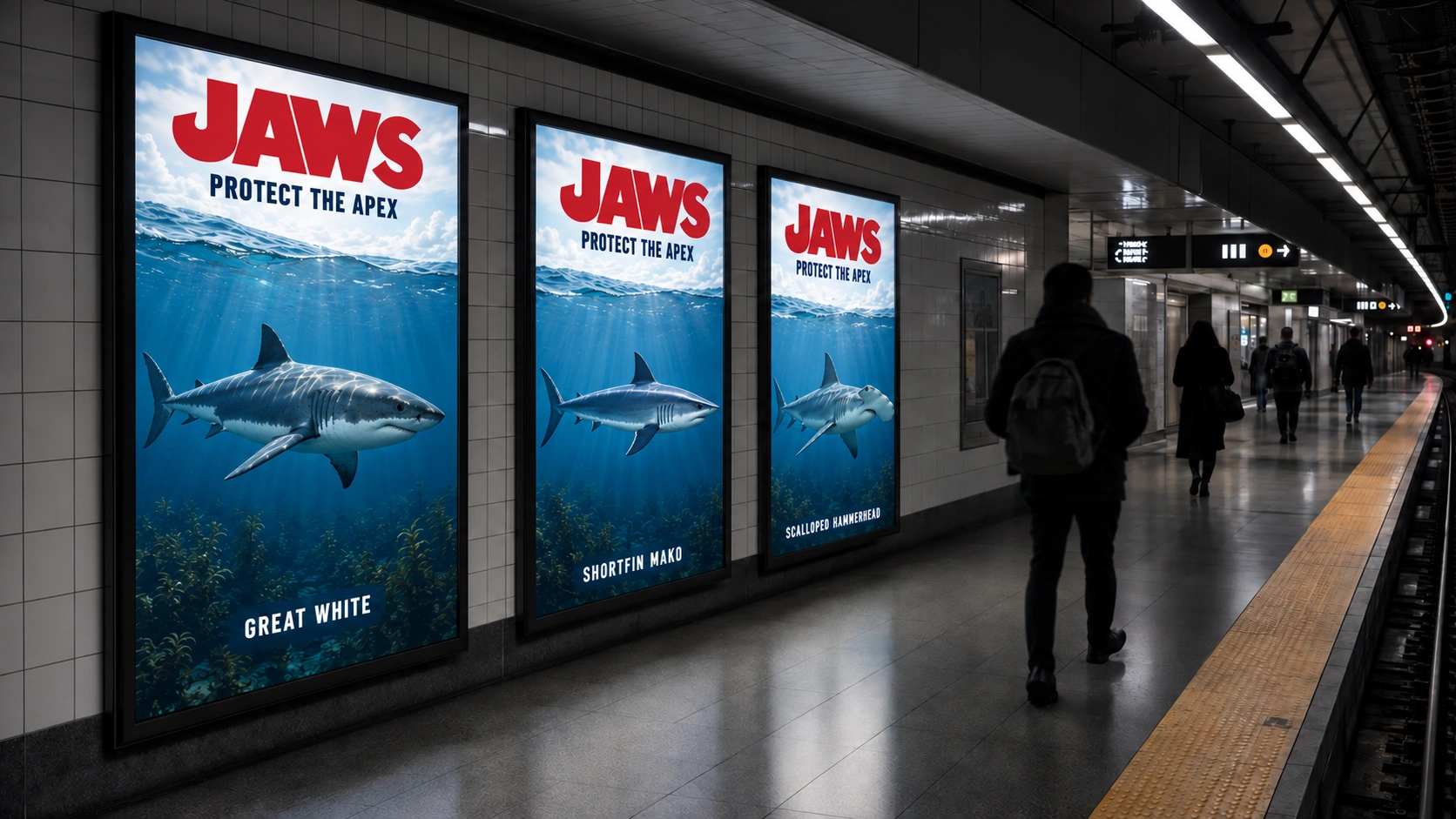
The red wordmark and waterline give the image a familiar starting point. Those elements hold the poster series together.

CAMPAIGN STRATEGY / CREATIVE DIRECTION / PARTNERSHIPS / IMMERSIVE EXPERIENCE
WHERE I STARTED
JAWS helped shape how people imagine sharks. For me, it also made me want to know more about the animal beneath the story. I built this independent campaign around that curiosity. The film’s familiar tension gives people a way in, then the work needs to hold their attention long enough to introduce the science.
“Use the legacy of JAWS to change what the shark means.”
WORKING THROUGH IT
The red wordmark and waterline give the image a familiar starting point. Those elements hold the poster series together.
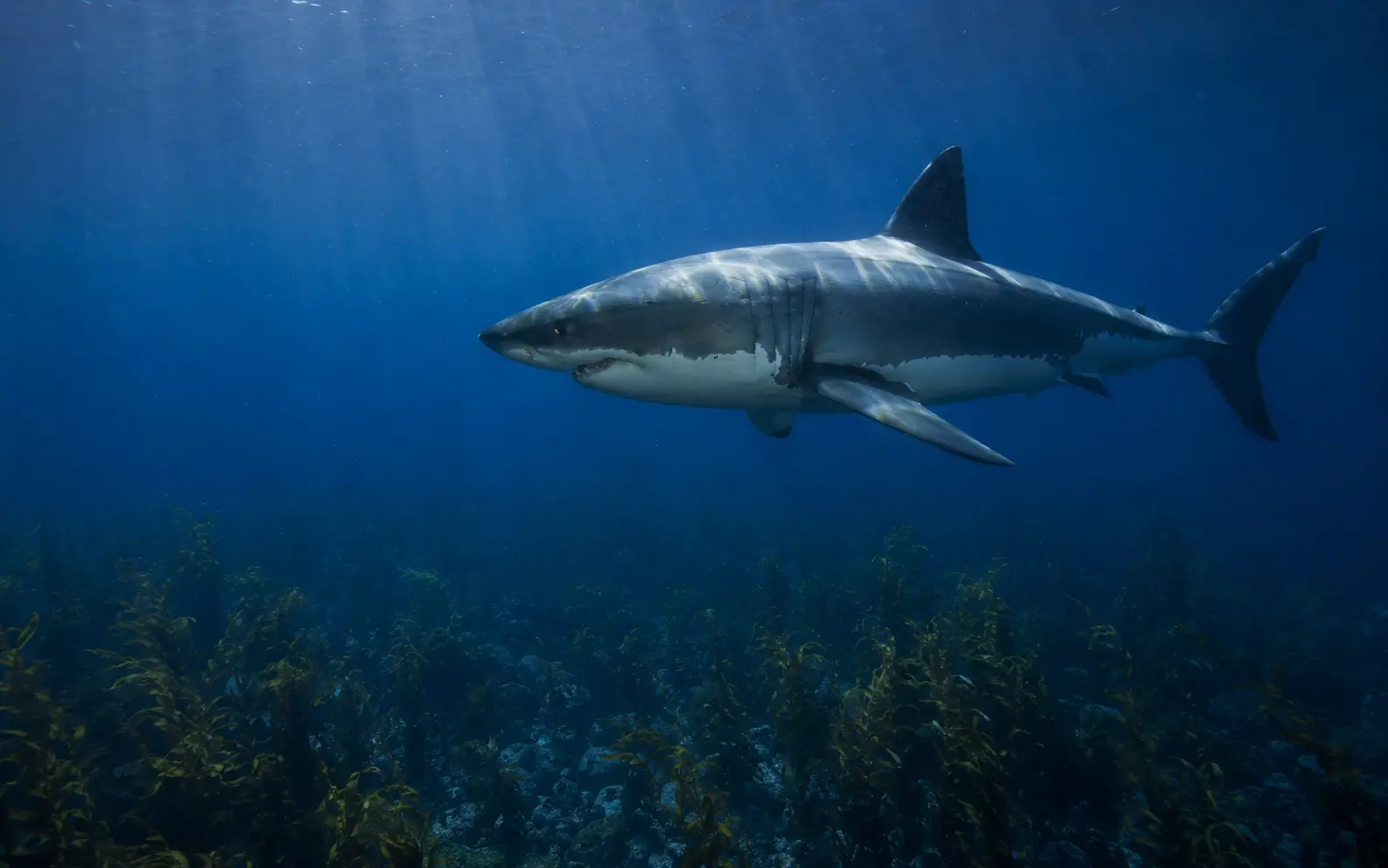
Use calm side views and an overhead portrait, with the whole animal in frame. Remove the swimmer so each shark has room to be observed.
The species name and global conservation status stay close to the image. A source link gives anyone who wants to know more somewhere to go.
Start with one screening and a scientist-led encounter afterward. A field card would lead visitors to one participating recipient’s project page.
THE IDENTITY
The film supplies the red wordmark and the waterline. Blue light gives the animal more room. Species information sits beside the image, with monospaced labels carrying the research into the later tracker study.

We created a monster. Now protect a guardian.
I imagined this campaign for the 50th anniversary of JAWS, with Shark Week as the cultural stage. Sharks have always been among my favorite animals. The film made me want to understand what was moving beneath the water.
That curiosity led me to the animal beneath its reputation, following its instincts and doing what it needed to survive. I wanted that same curiosity to carry into the campaign, then into real conservation work.
The great white leads the campaign. Its recognition draws attention to the wider shark and ray extinction crisis, so the story keeps growing beyond the animal people already know.
37%ESTIMATED THREATENED WITH EXTINCTION / SHARKS, RAYS AND CHIMAERAS / 2021 GLOBAL ASSESSMENT, REPORTED BY IUCN IN 2022The red masthead and waterline keep the film in view. I changed what happens below it. The side views show the sharks on a level course. An overhead view gives the hammerhead’s shape room to register.
The swimmer is gone. You can look at the animal’s whole body before the species name and conservation status give that image context.
The treatment starts at the waterline. The camera then slows and moves alongside the shark, giving you time to see how it travels.
The waterline flickers in film grain. The theme begins.
The theme slows toward a heartbeat.
Color returns. The camera moves beside the whole animal.
One icon introduces a whole system.
Protect the apex.
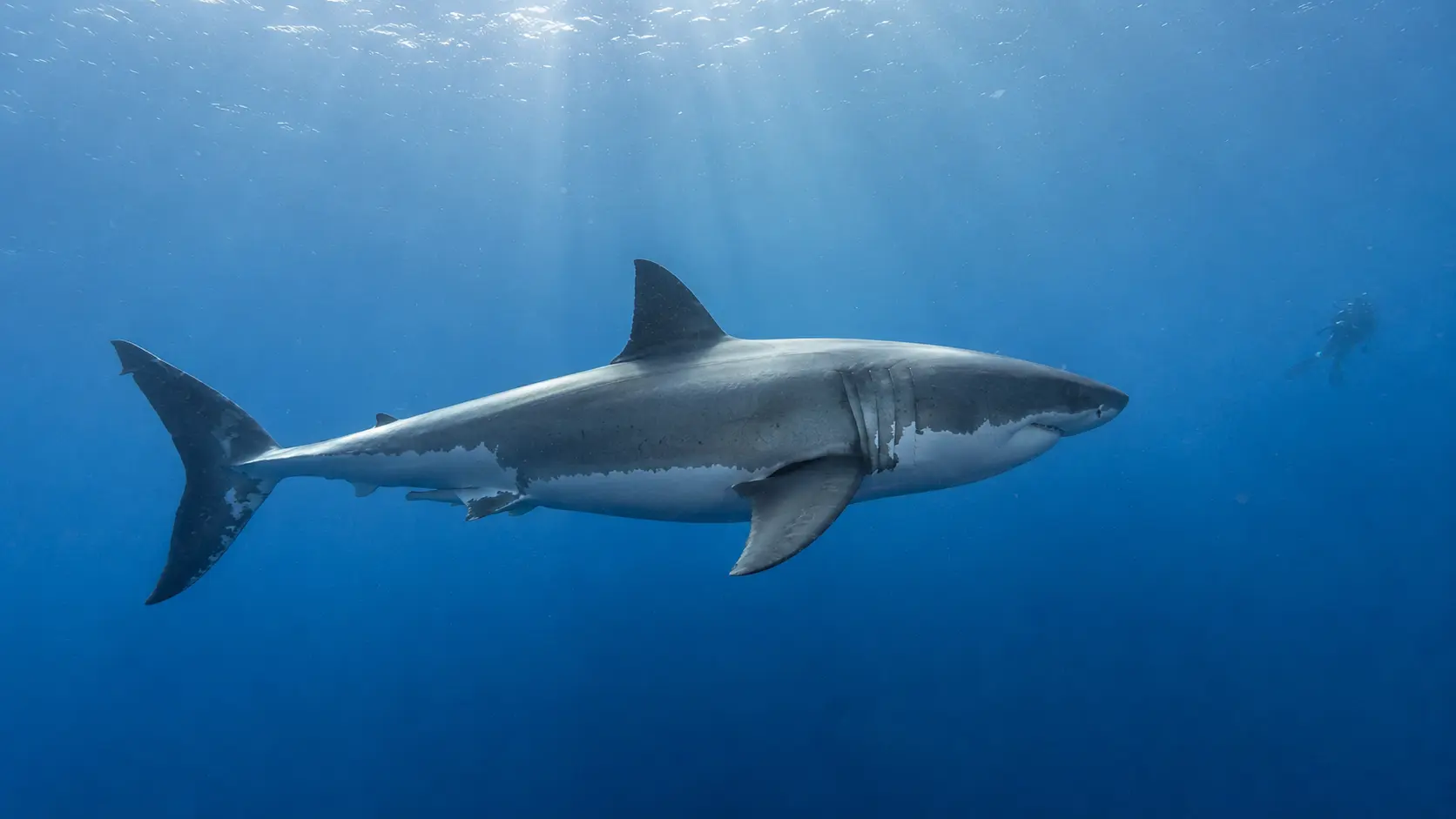
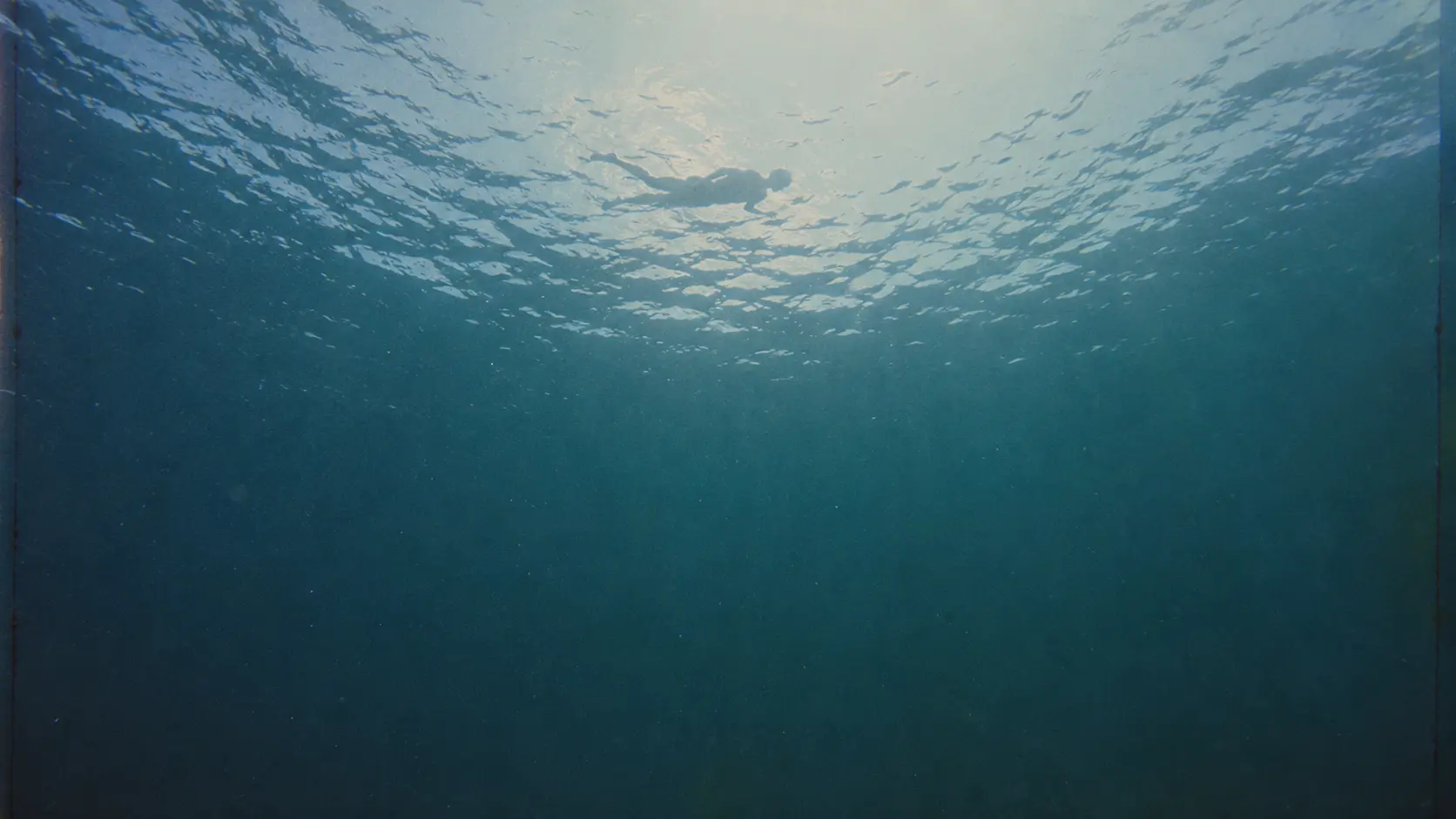
Keep the waterline in the same place across the series. Let each silhouette carry the difference. The source note sits beside the poster, where you can read beyond the campaign line.
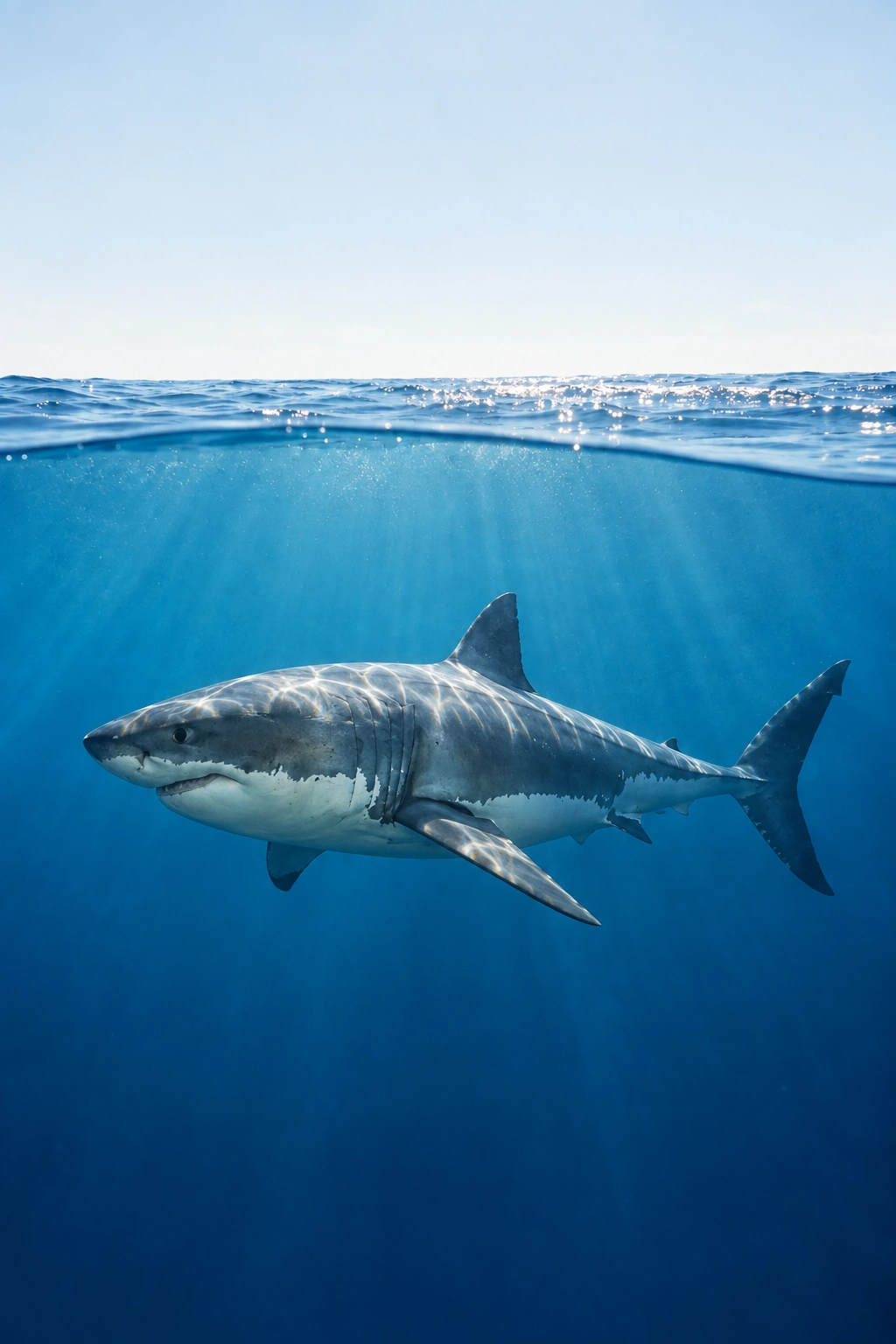

LOOK CLOSER. PROTECT THE APEX.
LOOK CLOSER. PROTECT THE APEX.
Status labels use global IUCN Red List assessments. Regional listings can differ. “Apex Roster” names the campaign. Sharks have different ecological roles, which the proposed education material would explain.
NOAA SHARK FACTSIntroduce another species at each transit stop. The red masthead connects the series. A different silhouette gives people a reason to read the next fact.
Each product study would need a defined contribution and a named conservation recipient. A launch would state both before purchase. The receipt would link to the recipient’s reporting.

Four buildable species would make collecting a way to learn identification. An oceanographer-reviewed fact file would sit with each model, so you could name the animal you built.
Rashguards would borrow each species’ real markings. A stated contribution would go to a field partner working on that animal’s protection, with the purpose named before purchase.
Hammerhead silhouettes and whale shark spot patterns bring the animals into skate culture. The footwear study uses a small shark mark. The wider pattern family would carry that same recognition into everyday wear.
A proposed research partnership would support tagging and field time. Migration-corridor studies would give that work a specific question, with public reports explaining what the tracking showed.
Step Into Amity proposes a life-size spatial-computing encounter through a headset. Whale sharks would join the four-species campaign here to show a different scale and feeding role. Mobile browsers and a proposed Discovery tracker would carry the story beyond the gallery. A seated story mode would offer another way to take part.

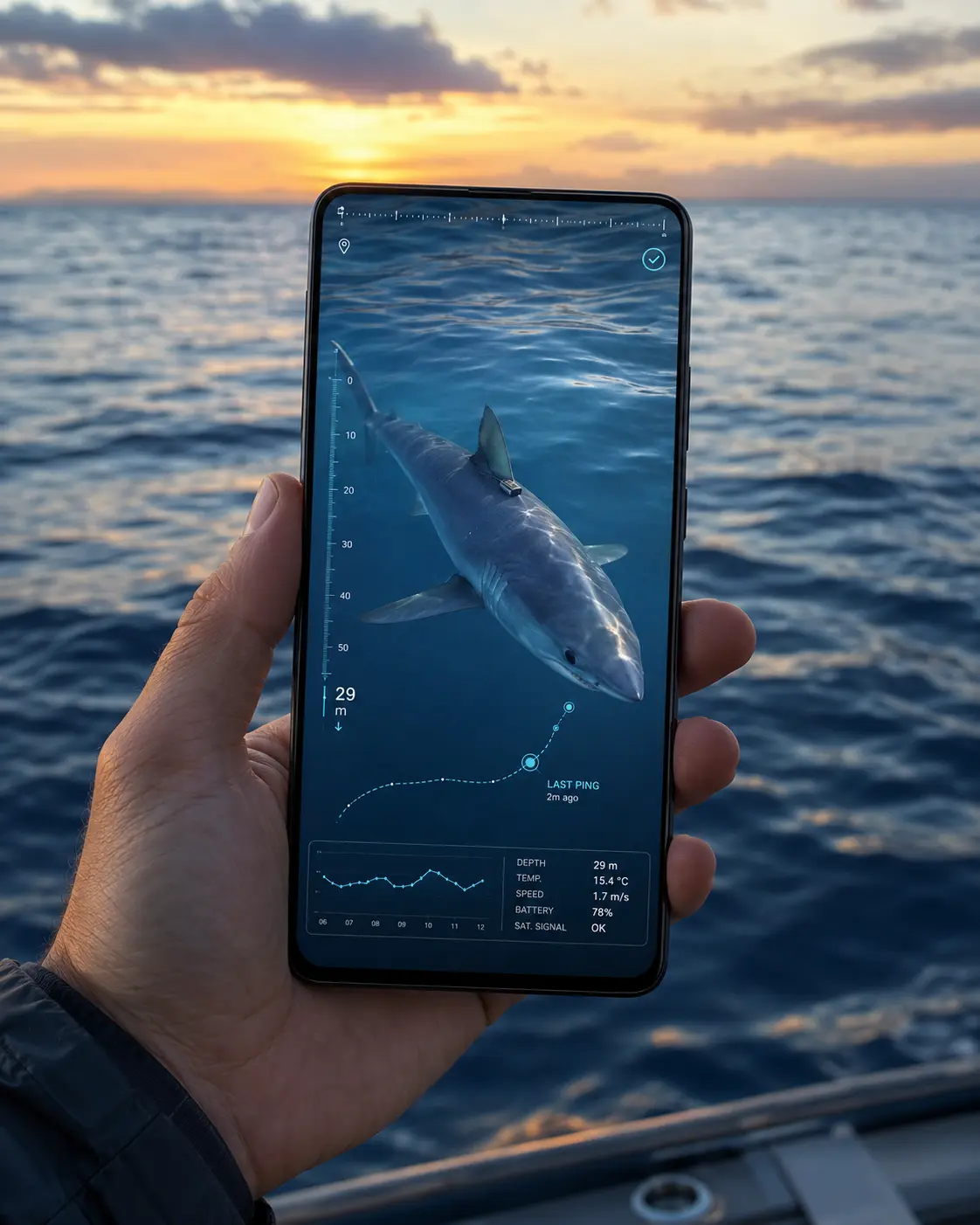
Estimated distance / rolling 7 days
The rights holder would shape the film references. A research partner would guide the animal information. Product collaborators would agree a specific contribution and reporting plan.
Would license film references and define how the campaign could use them.
Would premiere the film during Shark Week and host the tracker, with field stories alongside it.
Could advise on the story and its connection to ocean-conservation work.
Could connect the campaign to fisheries policy and habitat protection, with anti-finning work and education. Each participating recipient would name the work a contribution supports.
The great white opens the campaign, then each threatened species gets its own behavior and conservation story. Its shape guides a product direction. The contribution would name a participating recipient working on the threat shown beside that animal.
Use the most famous shark in cinema to replace a monster story with ecological respect.
Reveal the collapse of a once-abundant open-ocean species and direct support toward recovery work.
Turn extraordinary speed and migration into a reason to understand pelagic fisheries pressure.
Use schooling behavior and migration corridors to make habitat protection visible.
The film opens the story. The wider campaign gives people ways to stay with an animal and support the work protecting it.
The red masthead and two-note theme bring the film back into view. The poster gives people a familiar starting point.
The rewind treatment slows the encounter. You get time to watch the animal move.
The great white leads you to the wider roster. Each species gets its own image and a research story.
A life-size encounter introduces the animal. Field stories and a proposed tracker would let you follow its movement after you leave.
Product contributions and optional donations would support named conservation work. The public ledger would show where that support went.
Fifty tags would be a planning target for the anniversary campaign. Participating scientists would set the actual count and species mix after reviewing costs, permits and field capacity.
The ledger would name the recipient and restricted purpose, with the amount and disbursement date. A published reporting schedule would show what the money supported.
Track reach and changes in knowledge, then measure whether fear of sharks has changed. Record the action people take separately from the conservation work funded. These would be proposed measures, with no results claimed.
PROPOSED FIRST EDITION
The first campaign would use one approved JAWS screening and a small scientist-led encounter afterward. The great white poster opens the conversation. A short, accurate field story gives that attention somewhere useful to go.
The full campaign includes the life-size encounter and mobile route, with a public tracker and the product collaborations. Each partner would agree its own brief. A first screening would test the story while that wider world remains the creative direction.
Ask visitors to explain one thing they learned about the animal. Compare that with what they understood before the screening.
Count visits to the named recipient’s project page separately from donations received. The recipient would report how any campaign funds were used.
CAMPAIGN MANIFESTOThe JAWS image starts the conversation. The film gives the animal room to be seen. That attention can travel into the things people wear and the research they follow, with a clear way to support its protection.
FROM FEAR TO FASCINATION.
FROM ONE FIN TO A WHOLE OCEAN.
WHERE THE CONCEPT STANDS
Protect the Apex proposes a route from a recognizable film to shark science and conservation support. The campaign uses the film’s visual memory, then gives the animal more space. Partnerships and funding are part of the proposal. No campaign results or approvals are claimed.