CHANGE THE SCALE OF TIME
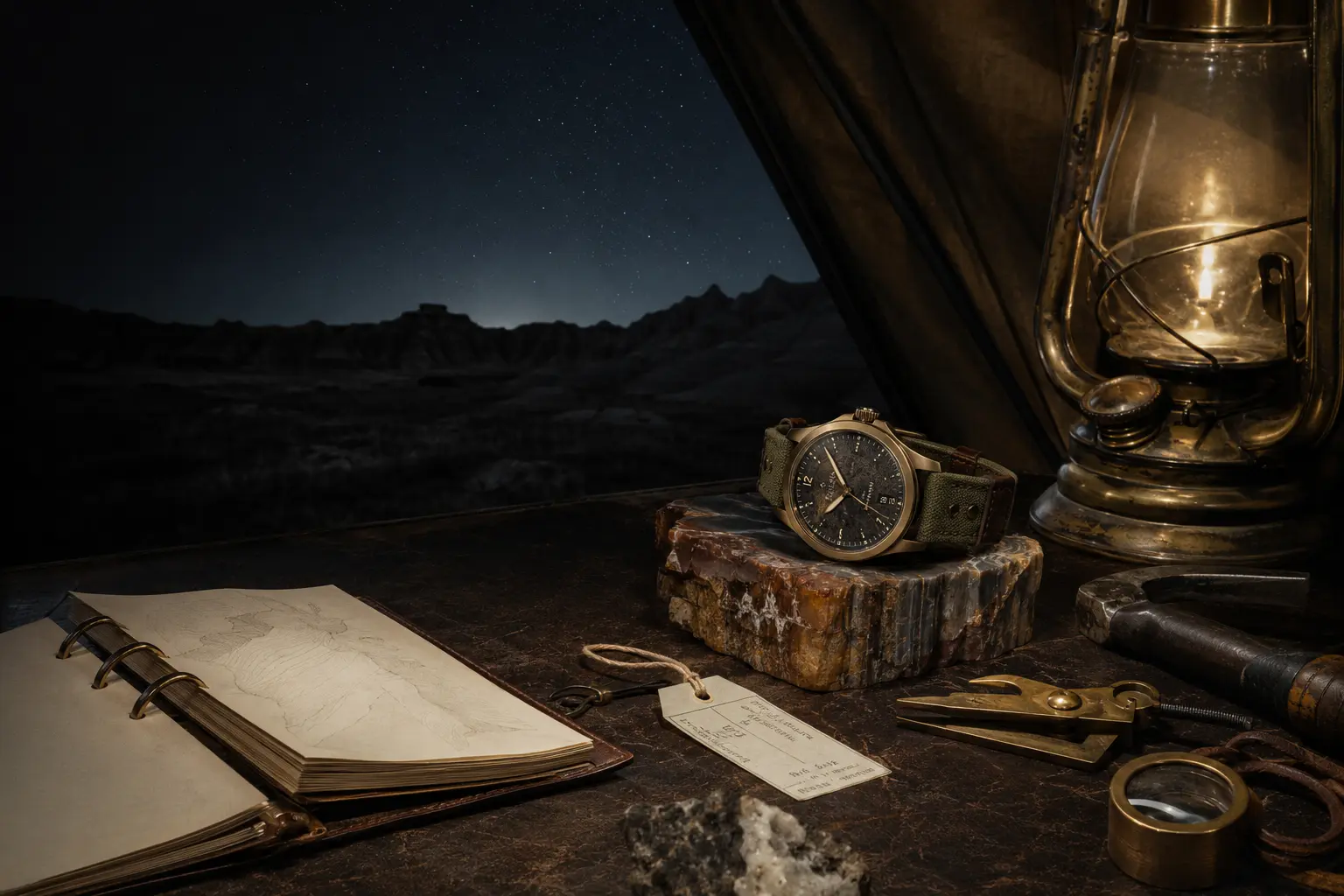
The material’s age sits beside the time on the watch. Geological history gives each edition its source.
CAMPAIGN STRATEGY / CREATIVE DIRECTION / PRODUCT / EXPERIENCE
WHERE I STARTED
Fossil measures the day. A natural history museum can show time on a very different scale. That connection became the starting point for this independent study. I used geological materials and archive records to shape the collection, then kept asking whether each object helped someone understand where it came from.
“Before time was measured in seconds, it was recorded in rock.”
WORKING THROUGH IT
The material’s age sits beside the time on the watch. Geological history gives each edition its source.
An accession number should lead somewhere. Pair it with a source record and a field note that explains the material.
Carry the record onto the packaging. Journals and field equipment give visitors room to make observations of their own.
A proposed give-back supports field expeditions and youth STEM programs, so the collection can help fund future discoveries.
PROPOSED FIRST EDITION
The expedition world can start at one museum-shop counter. I would pair the proposed watch with a source card and a short material demonstration. The visitor can understand the geological reference before entering a larger campaign.
The dig imagery and city activations keep their place below. They are later partner-led editions. The first counter encounter establishes whether the field record makes the watch more interesting.
THE IDENTITY
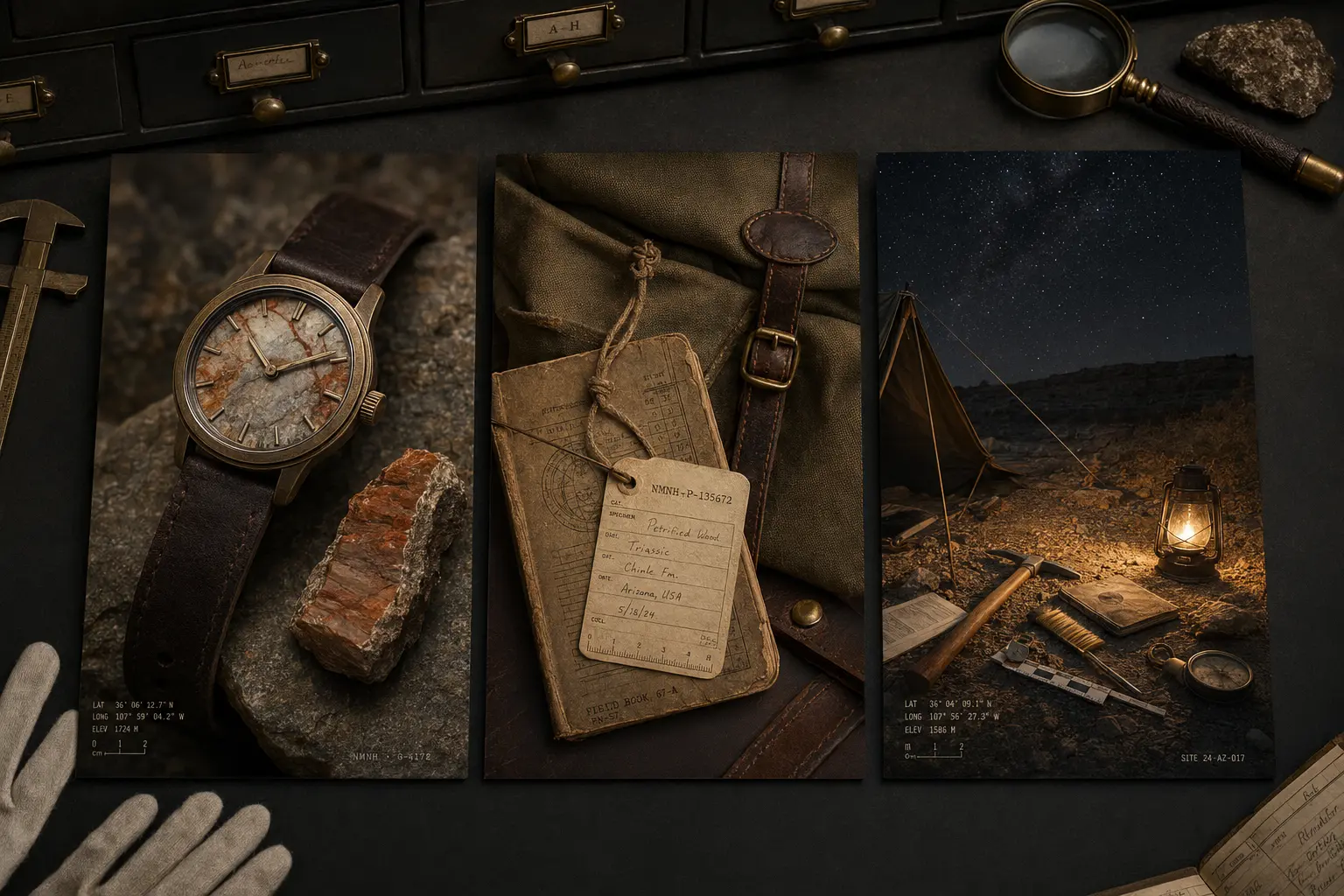
Specimen tags guide the product layouts. Olive and brass recall field equipment, with pale bone backgrounds for the records. The watch remains the object you look at first.
 ×AMERICAN MUSEUM
Time measured in millions of years.
THE VISUAL LANGUAGE
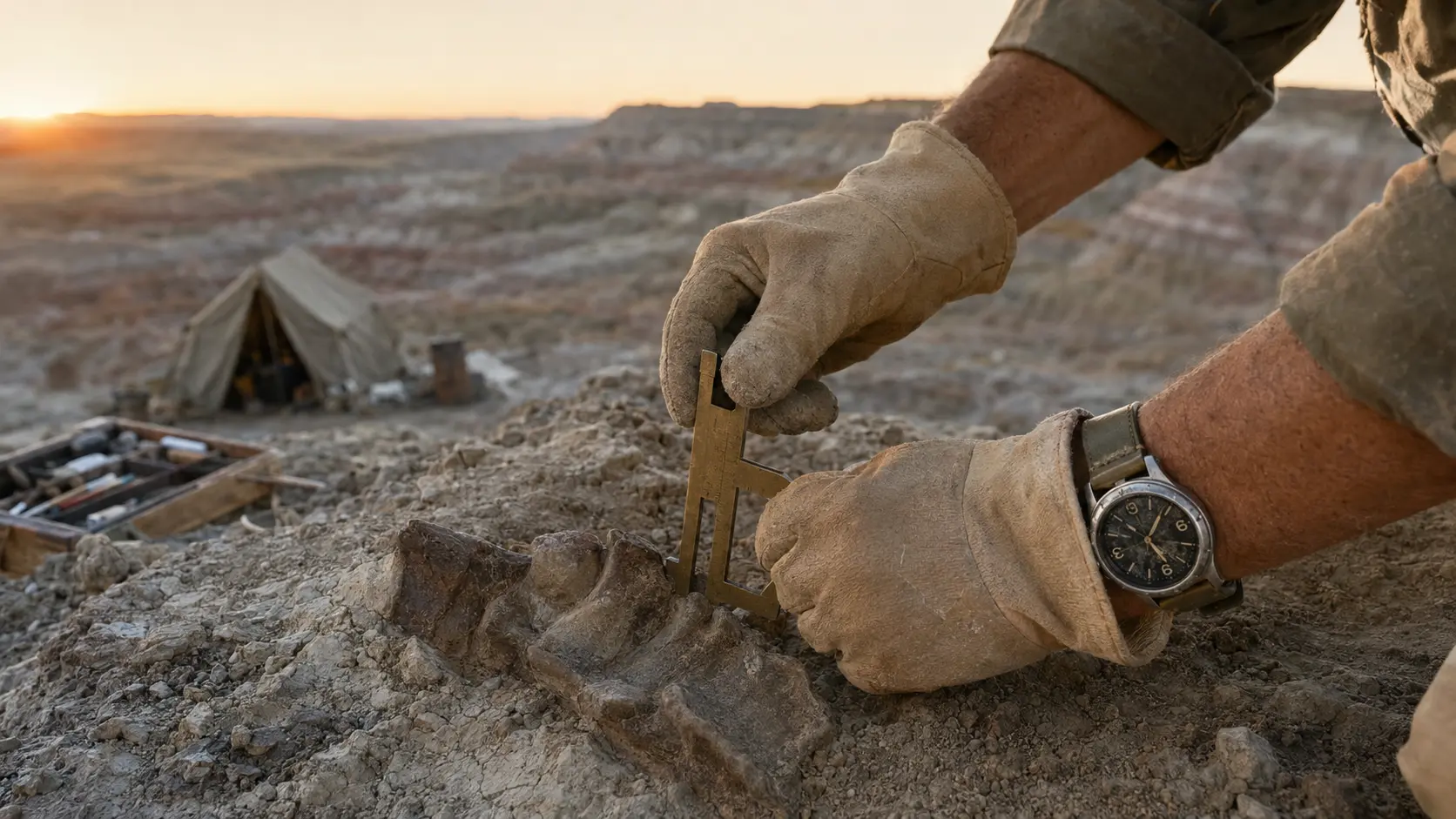
Field imagery introduces the material’s source. Geological sections and worn instruments sit beside the product details, giving the watch a record to refer back to.
APPLICATION
The same source record can become a packaging insert or an archive page. Curator audio adds detail that a small tag cannot hold.
EXPERIENCE
Let visitors handle a lens and examine a specimen. The display should give them something to investigate.
Sand, rock specimens, magnifying lenses, brass calipers, and AR let visitors uncover how each product was made.
An after-hours museum launch uses brass flashlights and UV field lights beneath the dinosaur halls.
A four-part audio series gives paleontologists room to tell the real stories behind field discoveries.
A digital slider moves each material between its present-day product detail and its prehistoric origin.
THE WIDER DESIGN STUDY
The following designs explore later editions. Their rollout depends on the first encounter working and each partner agreeing its part.
The watch measures an ordinary day. Geological records give its material a much longer history. Pair the object with a source someone can examine.
Craft, leather, watches, accessible collecting.
Science, discovery, archives, public wonder.
A field collection that makes deep time feel immediate.
FOSSIL × AMNH / THE FIELD EXPEDITION COLLECTION
The product record explains the material. Field audio adds the discovery story, while a public demonstration lets visitors examine it more closely.
A mineral and petrified-wood dial gives the hero watch a direct connection to geological material.
Every object is numbered, tagged, documented, and designed to be kept like a museum specimen.
Scientists bring the collection to active digs. Photographers document the fieldwork.
Retail, transit, audio, and AR make exploring the collection feel like a dig.
Put the material source and geological note beside the accession number. Glassine and specimen tags give the packaging a place for those records.
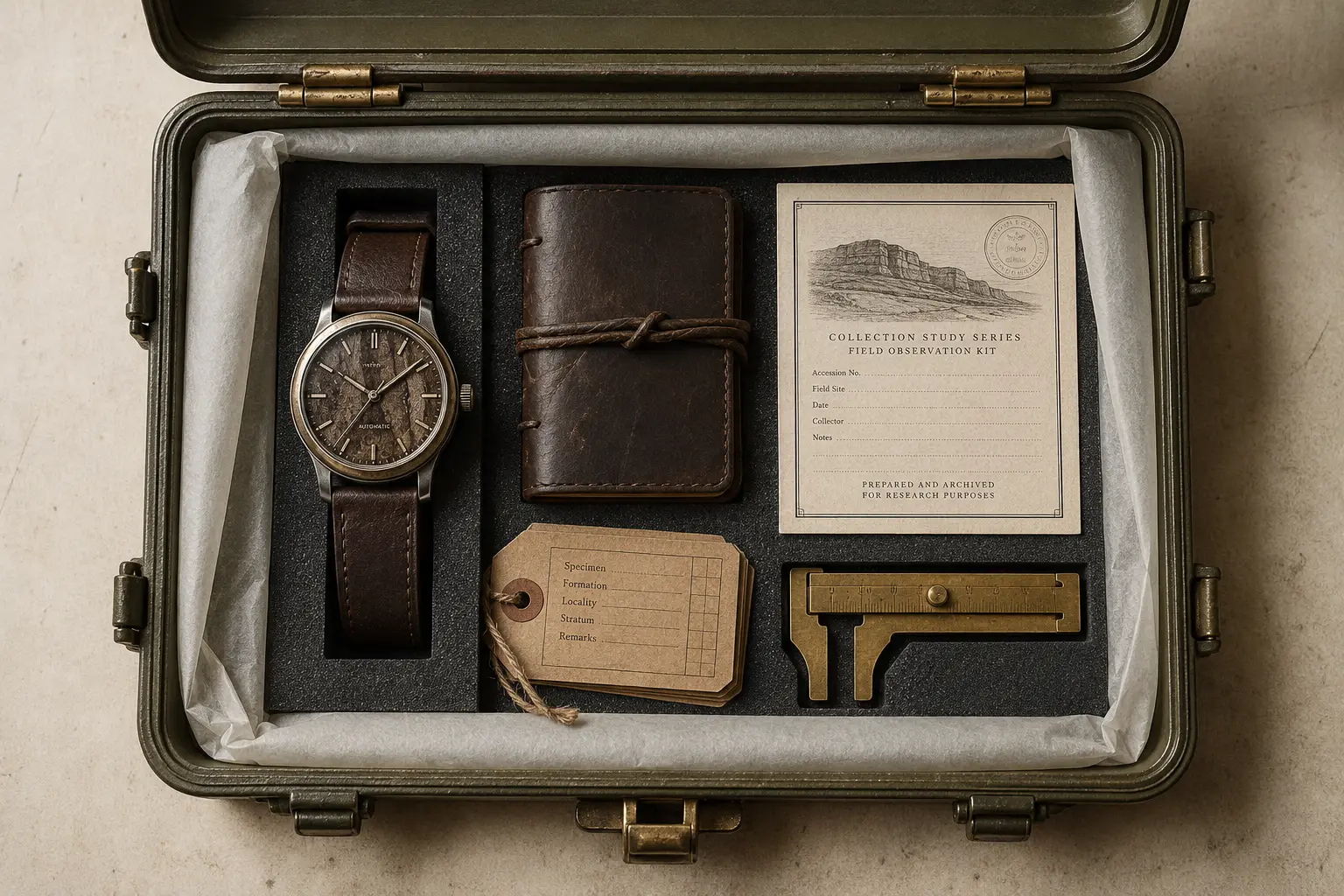
Unique numbers give each object its own documented record.
Geological materials deliver real texture without commercializing scientifically important bone.
Collection cards explain source, period, care, and the science behind each dial.
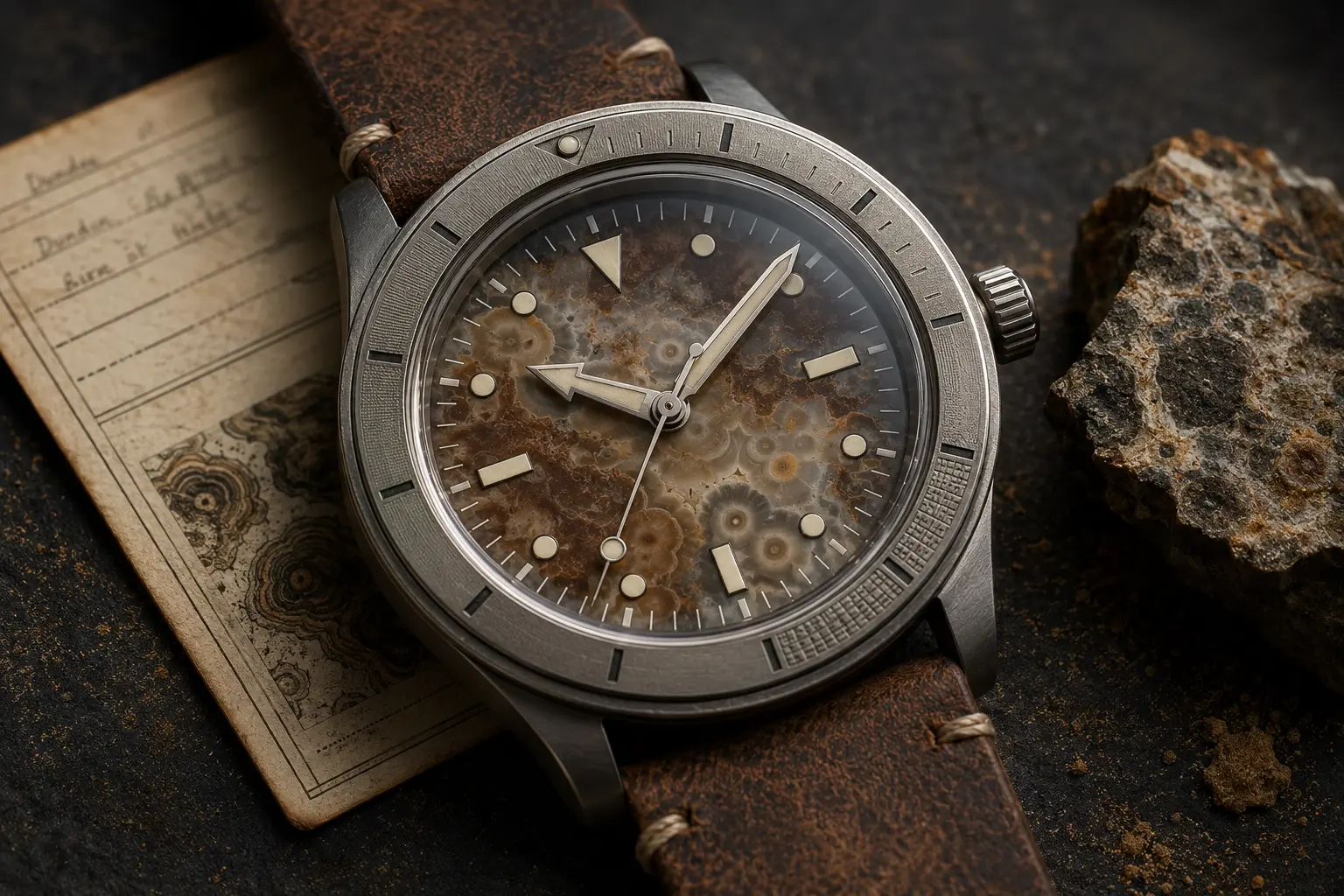
A fossil-agate mineral dial carries the story without turning scientifically important bone into a luxury material.
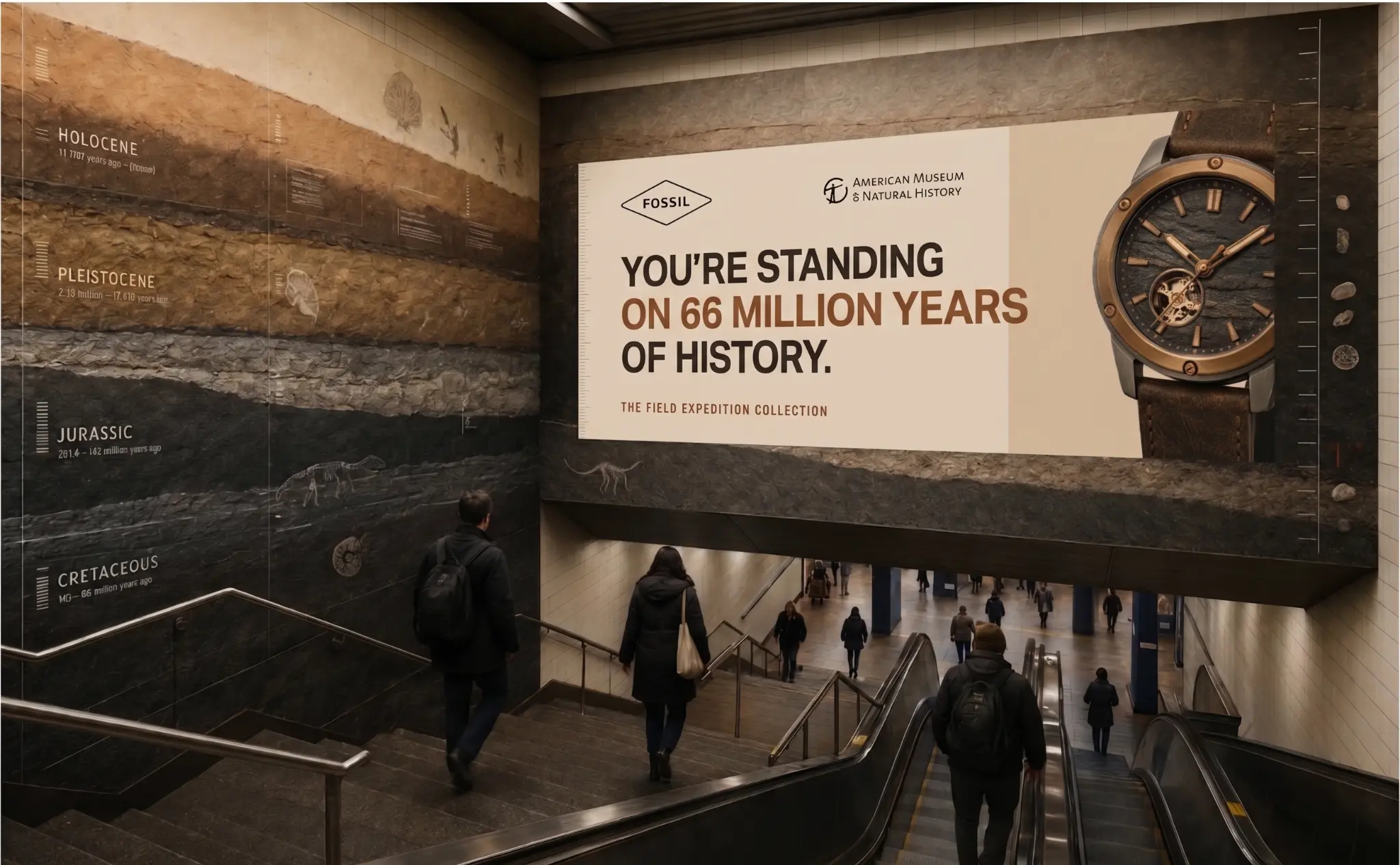
At the museum subway stop, the walls become a geological cross-section. The deeper commuters go, the farther back in time they travel.
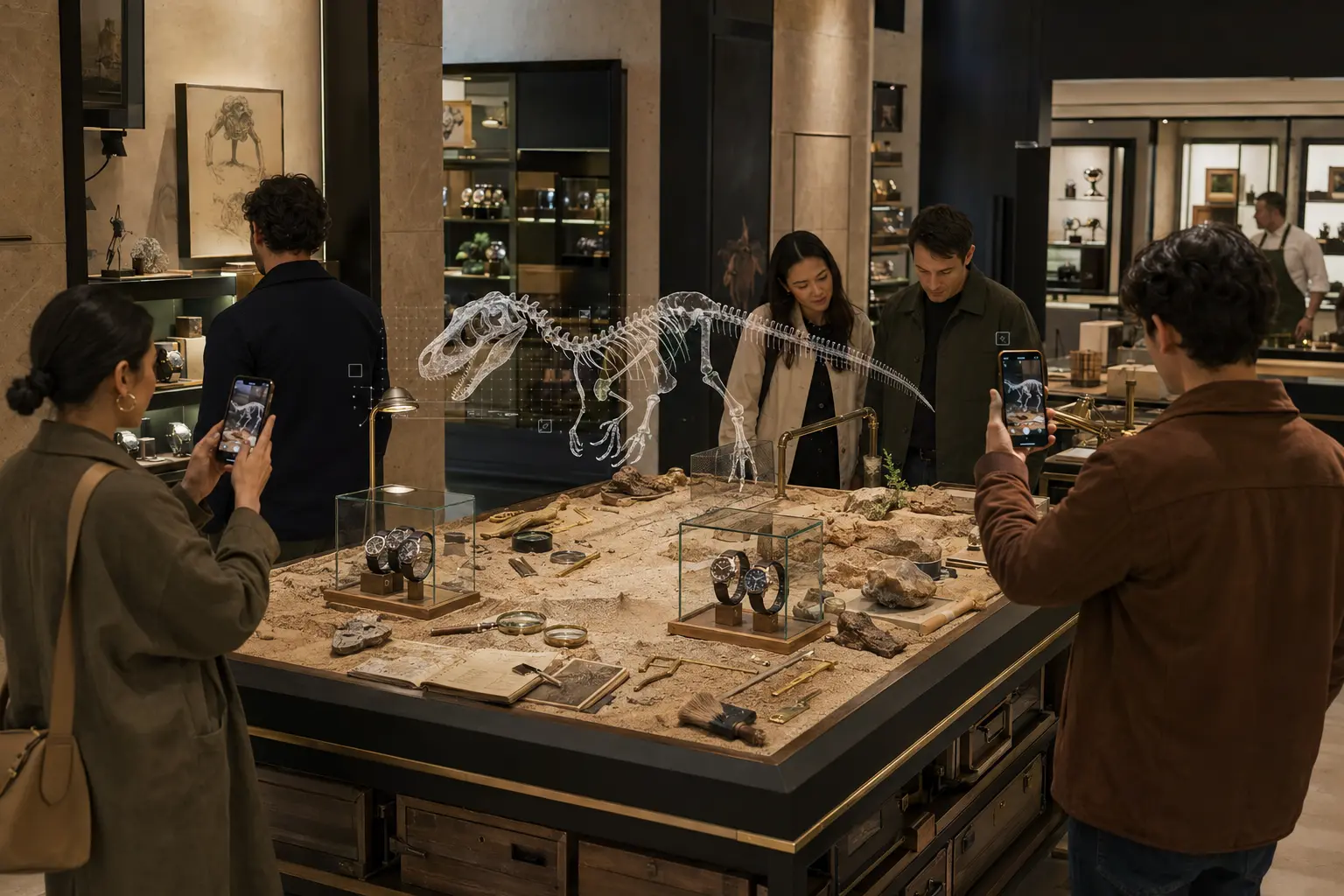
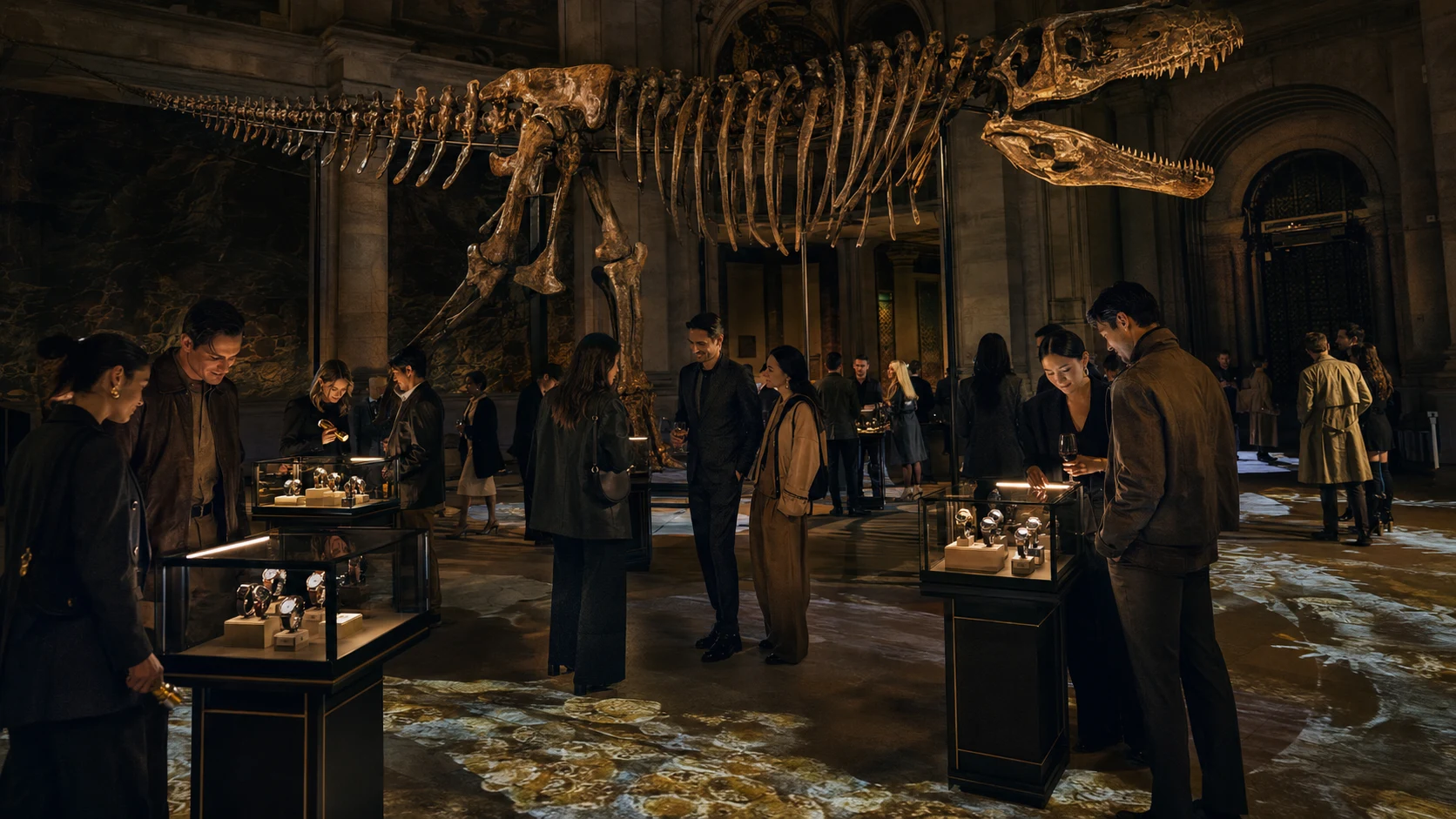
The store works like a research archive. Each product connects to its material, provenance, field location, and audio story.
A proposed contribution supporting field expeditions and youth STEM access.
A proposed curator-led series connecting products to real discovery work.
A numbered mineral-dial collector release designed to create earned attention.
The watch’s material links the product to geological time. The proposed contribution would support museum work, with the recipient and funded activity named.
AMNH connects its collections to active research and a global field expedition program.
AMNH RESEARCH ↗The Museum provides a setting for launch events and retail storytelling, with discovery built into the visit.
AMNH EXHIBITIONS ↗The proposed 10% contribution can support Museum research, education, exhibitions, fieldwork, and youth science programs.
AMNH MISSION ↗WHERE THE CONCEPT STANDS
The proposed collection connects a watch to a material record and a field story. Packaging follows the same archive structure. The museum program and give-back remain proposals, with the product designed to give people a reason to examine the source more closely.